Reading List
The most recent articles from a list of feeds I subscribe to.
How Final Fantasy VII's Tifa Arrived In Street Fighter 6

One of the most exciting announcements of Summer Game Fest's 2026 live show arrived near the end of the stage presentation when Capcom announced its fourth year of downloadable fighters for Street Fighter 6. After showing off Yasmine, Arjun, and Bosch, we learned that the fourth character is Tifa, the extremely popular Final Fantasy VII party member. While Tifa isn't the first crossover character to appear in the Street Fighter franchise, she could very well be the most popular.
"Tifa is a character that is beloved by all sorts of different games like RPG fans and general gamers," Street Fighter 6 director Takayuki Nakayama says. "While she does come from an RPG background that's completely different from a game like Street Fighter, she does utilize martial arts in her moves and skillset, so we always felt that she would be a good fit into a game like Street Fighter 6."
The developers had a mutual friend who works at Square Enix, and they had been talking about how great it would be to get Tifa in Street Fighter 6 and collaborate in some way. Then, at Tokyo Game Show 2025, Nakayama had the chance to present on stage with Final Fantasy VII Remake Trilogy director Naoki Hamaguchi, and he broached the topic.
Those conversations led to the moment on-stage at Summer Game Fest 2026's live show, when those two reunited on stage to unveil Tifa as a Year 4 character in Street Fighter 6. "We were able to build our relationship from [that TGS presentation] and we kind of naturally thought that Tifa would be a great fit for the game," Nakayama says.
 Tifa, as she appears in Final Fantasy VII Remake
But it wasn't just Hamaguchi giving the green light to Nakayama; Square Enix remained collaborative throughout the process of bringing Tifa to life in Street Fighter 6. "From their perspective, they had a lot of different ideas of what Tifa would feel like and look like in Street Fighter 6 or a fighting game, since she hasn't been in one before," Nakayama says. "The feedback we received from the team has been very positive. They're very fast-paced in terms of responses, so that shows a lot of enthusiasm from them, not just Hamaguchi-san, but even [artist, writer, and director Tetsuya] Nomura-san has been involved in the review process, too. [...] He's been very helpful, even with the announcement trailer that we had. He reviewed that and was very involved to the very last minute of the production of that."
When the news hit, reaction videos spread rapidly across social media. "There's been a lot of great reactions, both on the US and the Japan side, as well," Nakayama says. "We actually just had a Capcom Pro Tour event in the Dominican Republic called Blink Respawn, and we saw a lot of videos of people watching the announcement at the event and getting super hyped and acting like kids over there. And these are players who are trying to focus on their event! But yeah, they showed a lot of excitement for that."

Tifa is all set to join Street Fighter 6 as the third scheduled character in the game's Year 4 lineup. Yasmine is slated to kick off the season on August 3, followed by Arjun in the fall, Tifa in early 2027, and Bosch in spring 2027.
For more behind-the-scenes stories about Street Fighter 6, read our extremely in-depth cover story from just before the game was released, and then read Game Informer's Street Fighter 6 review.
Fable's Relationships And Life-Sim Elements Create A Compelling Sandbox

Platform:
PlayStation 5, Xbox Series X/S, PC
Publisher:
Xbox Game Studios
Developer:
Playground Games
Release:
Rating:
Mature
The Fable franchise has always been about making choices and living with the consequences. These consequences ranged from reputational damage to actual physical changes. While the physical changes are a thing of the past with Playground Games' 2027 interpretation of the long-dormant franchise, player choice and consequence seem just as integral with this new entry.
Watch Our Video Preview
In the behind-closed-doors demo, I don't see anything about the story and very little regarding combat. Instead, I watch the developers toy around with the various systems at play in Fable. The hands-off demo I watch takes place entirely in Oakshire, one of the six regions in the open world of Albion. This region is heavily inspired by the British countryside and features several settlements, but the session is centered on Silverbrook, a peaceful farming town.
"It's a life-sim where you can start relationships and have families; it's a social sim where you can play with the people of the world to your heart's content; and it's an economic sim where you can build wealth, create an empire, and manipulate the economic fate of entire settlements," associate game director Will Kennedy says.

Over the course of the 30-minute demo, I watch as the hero, controlled by the developer, toys with the emotions of this peaceful village. After saving a talking pig from slaughter and handing some money to a down-on-his-luck beggar, the hero tries to romance the shopkeeper, Megan. He flirts with her, and she responds positively, but the hero doesn't quite stack up to what she's looking for. Since she's an "ambitious commoner," she has high standards: She wants a partner who's an entrepreneur, who wears fancy clothes, and owns their own home in Silverbrook.
"We have over 1,000 handcrafted, fully voiced NPCs for you to interact with," Kennedy says. "They have their own relationships, routines, homes, jobs, and memory. It's not scripted; it is emergent behaviors powered by real-time systems. They go to work, they go to bed, they have hobbies and families. Sometimes, they just want to spend time in the pub. Albion feels alive because its people have lives."
To meet the entrepreneurial requirement, the developer goes to a nearby pub and drops a hefty amount of coins to purchase it. Once he owns it, he can adjust prices and hire new employees to manage profits. To round out the pub's efficiency, the hero hires the beggar he had donated to earlier. These businesses generate passive income, which can be collected from any owned business.
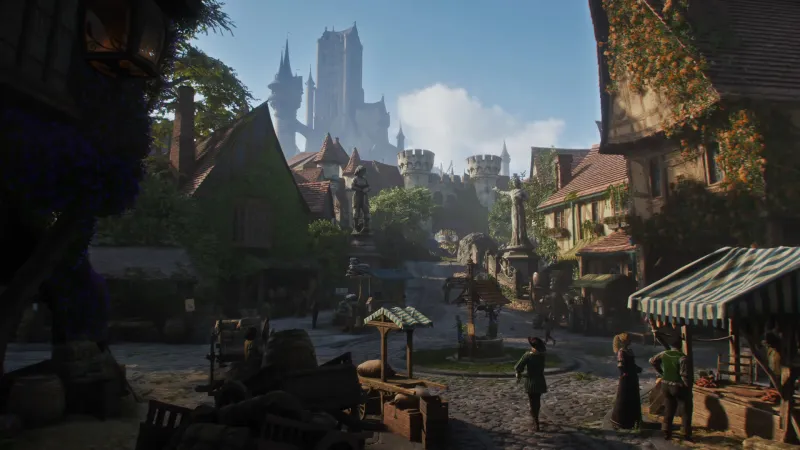
The hero's next stop is the clothing store, where he buys the fanciest clothes on offer. Then, he picks up a blacksmith job to earn enough money to buy a house. With all the qualifications for Megan's heart satisfied, the hero returns to her and takes her out on that date. They seem to have a great time, but suddenly, the dev decides to go down the route of cruelty. Without warning, the hero breaks things off, shattering Megan's heart and leaving her wanting nothing to do with him.
From there, it's a tour de force of meanness, including attacking civilians, resulting in the town's security forces getting involved. As you take these actions, you accumulate distinct reputational qualities. These qualities follow you throughout the region, but if you go to another part of Albion, you get a clean slate.
"Every action you do, every choice you make generates a local reputation," Kennedy says. "You become known for the reputations that you build, and everyone will judge you on them through their own moral lens. That's really what's at the heart of our updated, complex-yet-nuanced take on morality. Just like in real life, one person's good is another person's evil, and even being merciful could divide opinion."
I love the life-sim elements I'm seeing of Fable, but there's still so much to learn about this highly anticipated return of one of the original Xbox's most exciting franchises. Playground Games is coming off one of the top-rated games of the year with Forza Horizon 6, and if Fable shapes up as well as it looks, the studio could further prove to be Xbox's most valuable.
Gears of War: E-Day Preview - More Insight Into The Coalition's Hopeful Return To Form

Platform:
Xbox Series X/S, PC
Publisher:
Xbox Game Studios
Developer:
The Coalition, People Can Fly
Release:
Rating:
Mature
The Gears of War franchise was previously among the tentpole series for Xbox, but believe it or not, there hasn't been a new mainline entry since before the pandemic. Gears 5 continued telling the story of a new generation of COGs in 2019, complete with wide-open exploration areas and an emphasis on Kate Diaz's familial ties. While the next evolution of Gears brought some intriguing ideas, the story didn't seem to resonate with the wider player base as widely as the original story focused on Marcus Fenix and Dominic Santiago. With Gears of War: E-Day, The Coalition is returning to the start, back years before the events of the first Gears of War, to tell the tale of the Locusts' emergence on Sera.
The Coalition views this as a return to the series' roots, giving players a chance to see how the events that have largely only been alluded to within the Gears of War games play out before their very eyes. Taking place over the course of three days, players get to witness the fall of Kalona in a way that The Coalition wants to make feel like an all-out monster invasion. Through the power of Unreal Engine 5, The Coalition was able to model the entire city, even if it's not an open-world game. This means that you'll see vistas off in the distance, and not only will you be able to visit them, but also watch them fall as the three days progress; the longer the game goes, The Coalition says, the more everything falls into chaos and destruction.

"It is a very linear game, so it has very classic Gears levels that are linear streets leading to arenas and combat arenas, but we do have sections that open up into a wide linear couple of blocks," studio creative director Matt Searcy says. "You always have a main objective, you're always going to the next thing. You don't get to pick and choose what your quests are, and you can't just re-traverse all over the game however you want. Our story re-traverses through the city, but we're pulling you through a very linear adventure. We just wanted to find a way to really feel Kalona, and also the way the gameplay mechanics can experience E-Day."
This time around, players control Bravo Squad, a team of COGs brought together by circumstance. Following the end of the Pendulum Wars, Marcus and Dom arrive in Kalona for a military ceremony. At this point in time, Marcus and Dom are only connected due to their service, as well as their shared love for the late Carlos Santiago, Dom's brother, who had been killed in battle. It's only been a few weeks following the end of the Pendulum Wars, which lasted nearly 80 years. However, while at the bar that evening, the peace they expected to follow the end of the war is violently interrupted, as holes open up all over the city and Locusts emerge, brutally murdering the majority of the human population; it's brutal, dark, and very gory. Marcus and Dom spring into action straight from the bar, joined by Lucas Reyes and Mags Carter.

"They're all returned home, and they're all trying to figure out what life looks like next for them," studio brand director Nicole Fawcette says. "Marcus and Dom are having this conversation when the ground starts to shake and chaos erupts around them, and these four people that were just kind of living their lives in the bar, basically get thrown together by their shared values of being a Gear and knowing that duty comes first. They run towards the danger rather than running away from the danger. [...] Mags Carter is a former Gear veteran; she served previously in the Gears and was dishonorably discharged, and we're not going to get too far into her story, but now she works at the Imulsion refinery. Both her and Lucas are from Kalona, and that's really great when you're playing through the game, because Marcus and Dom are not from the city; they're here for a very special event. They basically get stuck in the city as Emergence Day unfolds, and Mags and Lucas are basically your guide to the city."
Gears of War: E-Day features four-player online co-op throughout all modes, as well as two-player splitscreen co-op. On top of that, players can select any character they want from the start. And together, players can utilize the new suite of moves, including jumping, sliding, and the ability to perform high mantles to scale taller walls than before. There are other minute changes, including the camera pulling out instead of pulling in close when you sprint to allow for more spatial awareness. On top of that, the active-reload's U.I. location has changed to be in the middle of the screen to be more intuitive with the player's natural sightline.

Since Gears of War: E-Day takes place 14 years prior to the events of the first Gears of War game, I ask Searcy if he envisions using that added padding between these entries to turn this single game into a multi-game prequel saga. As you might guess, he's guarded in his answer.
"When we look at telling Gears stories, one of the awesome things about working on Gears is it's got a bunch of lore, a bunch of characters, all sorts of stuff," he says. "We had this moment, I think we talked about it in 2024, where we just, at the studio, wanted to tell this story really, really badly. We decided that would be our next mainline entry, and we basically have been focused on that this whole time. And now, on this day, we're still trying to land this one, right? We always look at it as we have all these opportunities to tell stories, whether they're this time frame or other time frames, all sort of characters. We don't really have a commitment to what the next one's going to be right now, but it was really awesome to go back here, and I think there's a rich amount of storytelling in all over the Gears eras."

Though the gameplay session I witnessed was nothing beyond what was shown during the Xbox Showcase's Gears of War: E-Day Direct, I appreciated getting additional insight straight from the team behind what I consider to be one of the most promising games on the calendar this fall. For me, Gears of War was once worthy of being mentioned alongside Xbox's greatest first-party franchises, and though it's been on hiatus for nearly an entire console generation, E-Day looks like it could very well signal a return to the greatness I once expected from the franchise. We'll see if it delivers on that, when Gears of War: E-Day comes to Xbox Series X/S and PC on October 6.
Xbox's Matt Booty Talks Bringing Back Exclusivity, Lessons Learned, And The Future Of Xbox

The Xbox brand is celebrating its 25th anniversary this year, a key theme of its summer showcase. However, the brand has not exactly had a ton to celebrate lately. Following a huge splash with the original Xbox, a dominant generation with the Xbox 360, and a strong turnaround during the Xbox One era, the Xbox Series X/S have struggled to find an audience. Despite a spending spree that saw the platform acquire major publishers like Bethesda and Activision Blizzard, it has not translated into console sales.
While blame could be placed on any number of questionable initiatives and decisions, including but not limited to removing exclusivity from nearly all first-party games and conducting mass layoffs, Xbox seems intent on course-correcting to kickstart the new era following the departures of Xbox CEO Phil Spencer and president Sarah Bond, and the appointment of Asha Sharma. Small adjustments, such as allowing fans to vote for the type of stylization for the brand (resulting in it now officially being stylized as "XBOX") and restoring exclusivity to games like Clockwork Revolution and Gears of War: E-Day, show a willingness to listen to fan feedback, but that alone won't restore the platform to its former glory.
Thankfully, I recently had the chance to sit down with Xbox's chief content officer and former head of Xbox Game Studios Matt Booty to talk about lessons learned from the past few years as well as future plans for the Xbox brand.
First of all, congratulations on an awesome showcase. It was really terrific seeing all of the projects you have on the horizon. Do you have any projects that are particularly near and dear to your heart?
I love all my children! [laughs] I would say it was really cool to see Gears of War get its day in the sun, right? The studio is just really special. There's not a lot of new leaders there. The studio's kind of been through a lot... just behind the scenes, they've been through a lot, and so, for them to really have this moment to show off everything they've been working on, I just think that's really cool. And they've done a lot of things, and you're probably somebody that picks up on this: One of the funnest things about watching the show is when you get those little, like, "Ah! Oh!" Those little "oohs" and "ahhs" on little gameplay things.
Like, in Gears, the team did so much work on the cover system. Things like vaulting and climbing and jumping – things that are just not really part of the Gears sort of movement vocabulary that they added. And when you're watching the trailer, if you don't play, you're kind of like, "Oh, of course they do that." But Gears people saw it! And, like, the whole incremental cover now, and the stuff we can do, and even in the trailer there's stuff that didn't really come through. So I was excited to see Gears. That was cool. It was a fun moment for the team. Then, obviously, having the Direct, too, was just a great opportunity for them to show off what they've been working on.
 Gears of War: E-Day
As a huge Gears fan dating back to Day One, I am super excited to see it not only come back into the spotlight but also return to the team of Marcus and Dom, like in the early days. As much as I enjoy the new generation of characters, focusing on those two is such a nostalgic treat. Speaking of Gears, one of the big things to come out of the Showcase is that this Gears game, along with Clockwork Revolution, is part of this kind of revived sense of exclusivity with Xbox. What was the mission behind that?
A couple of things. First, we want there to be a reason for people to get excited about Xbox, a reason to buy an Xbox, a reason to become an Xbox fan. It's just, there's got to be a reason, and we want to make sure that that's there. Second, as a reward for people that have stuck with us, it's the 25th anniversary, which is pretty amazing, exciting, and there are people who have been with us from the beginning that we want to give them something. That's why we've got Gears of War: E-Day coming in 2026 and Clockwork Revolution from our studio inXile in Irvine just down the road coming in 2027.
Was there any concern with the fact that we just finally got Gears over on PlayStation 5. I'm assuming people played the remaster of the original game, became fans of Gears, and now, suddenly, it's not coming to PS5. Was there a concern about alienating that or a sense of pulling back from the road the platform was seemingly heading down?
Yeah, you know, we've had an opportunity with Asha coming in to really take a look at our strategy and, I'd say, put the focus on the future. I think that it's that focus out of which that decision came.
 Halo: Campaign Evolved
When you're looking at the current state of Xbox, as you've mentioned, we're entering this new era. We no longer have Phil. We don't have Sarah here anymore. We have Asha, yourself, and a few other people who have been elevated into leadership roles. How would you define the current state of Xbox as a gaming platform?
Well, I can speak from my point of view, which is the content in the studios, and the cool thing about being part of a platform and not just the publisher is that we've got a front-row seat on the development of all the hardware, we've got a front-row seat to the strategy, and it's really cool having our game teams work to feed, sort of, what they're seeing, what they need, into the hardware team, and then also get previews of what's coming back from the hardware team.
So, I guess, a lot of excitement about the future, and also you've seen the cadence that we've been able to get some things out on the platform side in terms of features, and that's also showing up behind the scenes in terms of how we work with that side of the house. I think everybody's excited. There's a lot of good energy and, like I said, also a focus on the future. But I think it's been true about us all along, just the fact that we've got these great first-party teams that can work hand-in-hand with the hardware teams.
You mentioned how this new era can be a reason for change, such as exclusivity returning for the future. You said "We want to make sure people have a reason to own an Xbox," but are there any other lessons you've taken from the recent history?
We want there to be a reason to believe and a reason to buy Xbox, and for there to be a reward for our loyal fans, but the third one that brings together what you just talked about is clarity. We really want to get clear. So, we've [made] clear that we've got Gears of War: E-Day coming this year, we've got Clockwork coming next year. Our big multiplatform, multiplayer, live-service games, they're going to stay that way. Commitments that we've made to ship games on other platforms that we've announced, of course, we're going to honor those commitments. We're not going to pull that back.
Going forward, we're going to be really thoughtful about what we do. We want to make the right decision, not the fast decision. And I think, in general, you can look for us that when we put a date on something, we're going to put a platform on it. So that's going to be the approach. I think the thing that ties those two things together that you talked about is really a drive for that clarity.
 Clockwork Revolution
To be clear, I think exclusivity is a smart decision for Xbox at this juncture. Though I was initially a fan of having the games everywhere, it does eliminate the need to have an Xbox in many cases. I think there's a limit to it, but I also think it's tough to put the toothpaste back in the tube after making a big show of eliminating exclusivity.
Looking at the Showcase overall, I've been doing this long enough to remember E3 press conferences and how Activision and Bethesda used to have their own distinct shows. Now, they're all under the Xbox banner, which results in a fleshed out content offering and Showcase, but has also had some struggles like layoffs, how do you assess the studio acquisition spree we saw a few years ago now that we're facing the results of that?
We've been pretty sequential and deliberate about it. It's been a thoughtful process. From where I sit, I really tend to focus on just where we are, which is the stewards of over 20 IP that have made a billion dollars in their lifetime. So, that's quite a lineup of things, and if we think that games are becoming the foundation of modern entertainment, then I think that puts us in good shape, right?
My job is to wake up every day and think about what could be in the way of these guys making great games, and how can I get that out of the way? I mean, that really is my job at the end of the day, and so I just consider myself so lucky to work with all these leaders, everyone from Kayleen Walters, who runs Minecraft, and the team looking over Call of Duty, we've just got such great leaders everywhere here, so that's where I get focused on. And I think that going forward that the IP and the slate of characters and worlds and stories is going to be really important, and I think we've got a great lineup.
So, when you talk about the acquisitions and then some other things, my job is on the content side, and I just say, "Boy, are we lucky that we have just got this amazing collection of studios and amazing collection of IP."
On the studio side, I did want to bring up one that I think a lot of people were really excited for, and then we got some disappointing news about it. It was actually a homegrown studio: The Initiative. Can you talk me through what went wrong there and why we never saw anything come to fruition from that studio?
Yeah, just out of respect for the team – and I really mean that – I'm not going to get into the gears inside the machinery on that one. I think let's be respectful to the team, you know? We always have to evaluate projects, we've got a responsibility to run a business, and we've always got to look at things, and that was a decision that we had to make.
 The logo for the now-canceled Perfect Dark game from The Initiative
With Asha taking over and there's this feeling of change in the air around Xbox, do you see the future of Xbox Game Studios being more of those style of homegrown studios or more acquisitions?
Right now I'm just focused on what we've got. We've got a really amazing lineup, and just, if you think about the year that we've had, and I'll go back to everything that Blizzard announced starting out the year; it was really the spring of Blizzard. And then, we got into Forza Horizon 6, which has been doing really, really well. Great to see the fans resonating with that. We have Halo: Campaign Evolved, and Minecraft Dungeons II coming this fall. We've got Gears of War: E-Day, then an amazing Modern Warfare 4. It's so great to see fans reacting to that positively.
I feel really good about that. And then, of course, we have the other stuff that we slated for 2027, starting with Fable early in the year, right? So that's a lot, and that's where my focus is right now.
As you list those off, I can't help but notice a lot of these are beloved Xbox properties that maybe haven't been in the forefront lately, like Halo, Gears, and Fable. Was that a deliberate choice to coincide with the 25th anniversary, wanting to pay homage to the brand's roots, or was that a coincidence?
Well, a little bit of magic, a little bit of mystery, right? [laughs] It always brings these together! Games are very complicated to make, you know. I think we're fortunate that we had these things line up. I didn't come up with this saying, but somebody pointed out to me, just as you did, that we've got Fable, Halo, Gears, and Forza in the same year. They called it the Mount Rushmore of gaming. I'm not going to be that presumptuous to say that it's that, but it's kind of cool that they all lined up this way, and it's just a fantastic opportunity to celebrate the 25th anniversary.
 Forza Horizon 6
Looking at Xbox currently, and I don't know if you want to attribute this to the lack of exclusives or something else, but I think it's fair to say that it's been a bit of a downturn for Xbox in terms of console popularity. How do you compete going forward?
Well, you know, Asha has laid it all out: It's great that she's got the vision. You just start to think about things like the return of Xbox, great games, celebrate the players and the fans, and that's the recipe, right? And my job very specifically is to land the great games part, and also how we can help with the return of Xbox with things like Gears exclusive and Clockwork exclusive. But I think that's the recipe.
Looking at the current landscape of gaming, it feels like the Xbox Series S finds itself between a rock and a hard place. Game consoles have been getting more expensive due to a confluence of factors. It's great that Xbox has this less expensive option in the Series S, but as the technology has gotten older, we've seen more developers, like the teams behind No Rest for the Wicked and Baldur's Gate 3, blame the Series S's shortcomings for their games not coming to Xbox. What is the strategy for the Series S, because you probably want to keep that cheaper option for players, but does that end up costing Xbox some great games in the long run?
You know, my job as the leader who's got the privilege of working with our first-party studios is to really be, kind of, I'll call it, like, a lighthouse, or lead the way. All our teams are committed to shipping great versions on Series X, great versions on Series S, great versions on PC, and on PC, doing our best to make sure that we can have settings that take the best advantage of the most killer rig ever, and also have settings that let a more average PC look fantastic. So, we're pretty committed to solving those problems, and I hope that sort of shows a path for other developers to do the same thing.
 Xbox's upcoming slate of Game Pass titles
What is the strategy for Game Pass going forward? How do you preserve that value proposition and avoid having to raise the price like we saw last year?
I think the great thing about us as a platform is that it just comes back to the fact that we want to have many ways to play. If you want to buy the game, great. If you want to subscribe, that's also worked out well for us. We also have cloud, right? We've also got supporting handhelds. It gets a little bit back to what you were talking about: some of the challenges in the industry with affordability around hardware. I think that's what's important for us: to make sure we provide a bunch of options.
Since you mentioned cloud gaming, do you anticipate any further pullback on exclusivity that would impact things like cloud gaming on Smart TVs or mobile devices, or a withdrawal from PC?
When we say "console exclusives," it means Xbox console. It'll still show up on all the normal places where we sell the PC version, and our cloud. Wherever you can get Xbox Cloud streaming.
If you missed Xbox's big summer showcase, you can see our full recap here.
Zany Punk Action-RPG Stupid Never Dies Gets Fall Release Window In New Gameplay Trailer
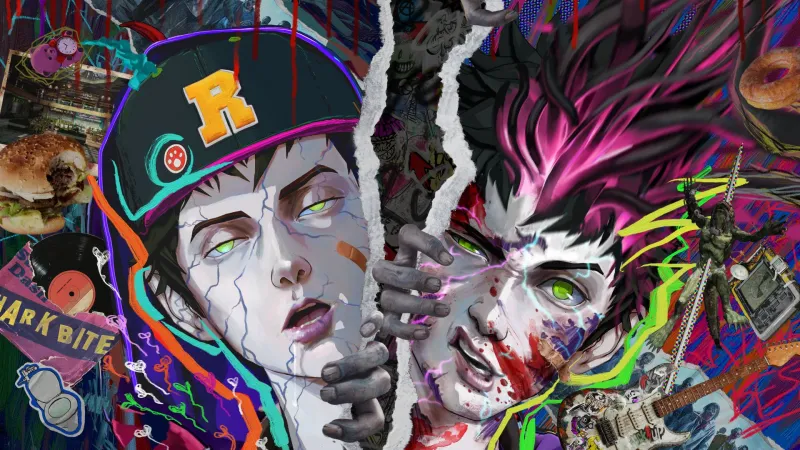
Stupid Never Dies is a pop punk-inspired action-RPG, and it's one we're excited to play. Now, we know we'll be doing so later this year, as a new gameplay trailer has revealed it launches on PlayStation 5 and PC this fall.
There's still no word on an exact date, but the nebulous "2026" has become the more defined "fall 2026," and to satiate you for now, developer GPTRACK50 has released a new trailer to showcase more of what to expect. In Stupid Never Dies, you play as Davy, the weakest zombie in the monster world, who will embark on a journey of self-discovery to master the abilities of 10 different monsters.
Check it out in the Stupid Never Dies release window trailer below:
As you can see, this new trailer showcases all 11 of Davy's styles: his standard Zombie form, plus Werewolf, Harpy, Golem, Vampire, Will-o'-the-Wisp, Cyclops, Snow Fairy, Merfolk, Lich, and Demon. In all of these forms, players will utilize Davy in all manner of 3D action-RPG combat arenas.
"Davy is not only considered the weakest among zombies – the lowest-ranked creatures in the monster world – but is also known as a complete coward," a press release reads. "His goal is simple: to revive Julia, the frozen woman he fell in love with at first sight, and finally take her on a date. As Davy's feelings for Julia intertwine with the motivations of his eccentric companions, the story gradually unfolds into an adventure where they must confront a common enemy together."
Stupid Never Dies will launch sometime this fall on PlayStation 5 and PC.
In the meantime, read Game Informer's recent preview of the game to find out why we're excited for more of it.
What do you think of this latest look at Stupid Never Dies? Let us know in the comments below!