Reading List
The most recent articles from a list of feeds I subscribe to.
CEO Of Lies Of P Publisher, Neowiz, Talks 2025, Overture Expansion, Release Strategy, Gen AI, And More
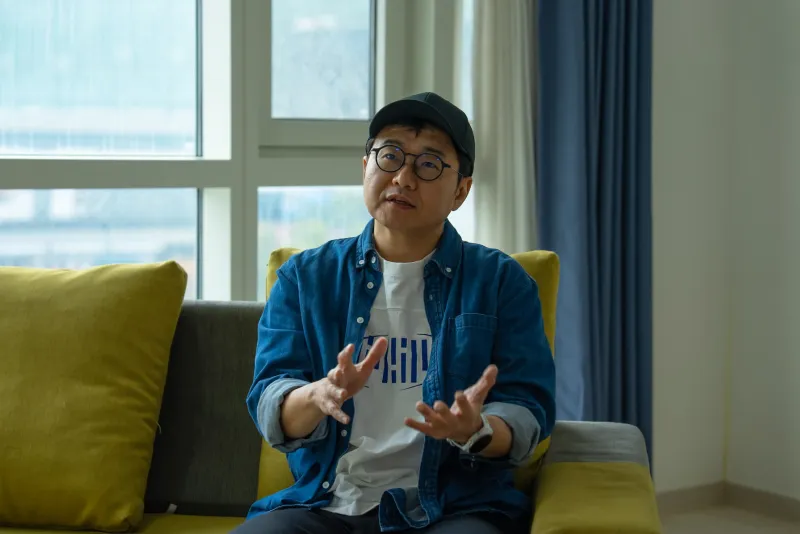
It's officially 2026, and as we all shift our brain's gears toward the games to come, I had the opportunity to speak with Neowiz, the publisher behind Lies of P, to discuss the past year. In the email Q&A below, Neowiz co-CEO Sean Kim (pictured above) and I discuss the publisher's 2025, last year's Overture expansion for Lies of P, how the publisher charts its release course, generative AI, and more.
And don't worry: I asked about the in-development Lies of P sequel.
Below, you can find the full email Q&A between Kim and I:
An Interview With Neowiz Co-CEO Sean Kim
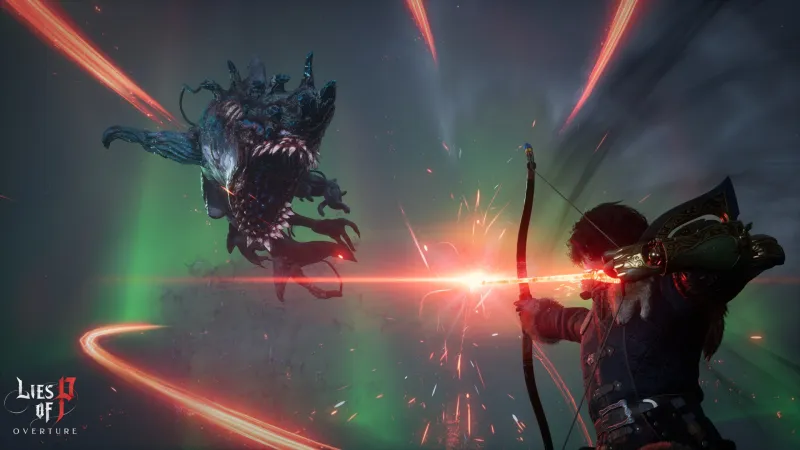
Game Informer's Wesley LeBlanc: How would you describe Neowiz’s 2025? Were there any particular standout moments or surprises for Neowiz, or did it feel like a year of consistency?
Neowiz co-CEO Sean Kim: Late last year, we did have some concerns; however, the year ultimately delivered results that exceeded our expectations. As a co-CEO of a public company, there is a clear responsibility to achieve a certain level of financial performance each year. We knew that we had developed something new and extraordinary with Lies of P, but forecasting its financial performance was something of a challenge. We bet heavily on the remarkable skill and passion of our development and publishing teams, and it paid off. Lies of P sales and sentiment numbers were very strong.
Overture also had a material impact on the base game numbers, bringing in a wave of new players and expanding the community in untold ways. In that sense, the release was particularly significant, as it solidified the foundation of an emerging pillar franchise for us moving forward.
Winning the Golden Joystick and the Lenovo 3D Juego awards in a stacked field of competitors this year was an added bonus. Having the game acclaimed by players and critics alike made the experience as personally gratifying as it was financially fruitful.
I think, because of the success of Lies of P, Neowiz is most closely associated with that series now. But what else is Neowiz up to beyond Lies of P?
Our goal is to consistently introduce successful IP that fans will continue to support and look forward to over the long haul, even five or ten years down the line.
Currently, we are internally developing more than five new PC and console titles, while also focusing on discovering global IP through collaborations with Western studios such as Zakazane and Wolfeye. We plan to continue investing in strong partners worldwide as we move forward.
Our lineup of third-party indie titles, many of them developed by talented local Korean teams, is also worth highlighting. In particular, Shape of Dreams and SANABI recently achieved both critical and commercial success.
Neowiz recently shared word of five unannounced games in development, ranging from Lies of P’s sequel to a narrative-based RPG to life simulation and more – how does Neowiz chart its path forward, and does genre play a role?
Our core strategy is to expand the size of our fanbase and deepen engagement among players who enjoy our games. We like to define IP as "content + fans." No matter how much effort goes into making great content, we believe it is difficult to call a game “great” if it fails to satisfy its fans.
We don’t set out to pursue a wide range of genres as a matter of strategic direction; rather, we’re circumspect about what we currently have and opportunistic about what we could execute well. Of course, the Lies of P franchise will need to be continued. That’s a given. But in general, our development cycle does not begin with a particular genre. Instead, it starts with the creative vision of our directors. We tend not to begin development by fixating on a play style or game concept first.
Instead, we evaluate proposals from our directors based on a few key criteria. First, is the genre attractive, considering the current market size and competitive landscape? Next, are we able to assemble a solid team that can deliver the project at a high level of quality? Finally, is there a long-term strategy for growing the game's fanbase and engagement?
We regularly revisit our ongoing projects using these same criteria to make sure that they stay aligned with our strategy, which is centered on both content and fans.
Can you tell me anything about the Lies of P sequel?
At this point, there is nothing specific we can share in detail. I can tell you that the team at Round8 Studio is excited about their work and fully focused on development.
With the Lies of P DLC receiving further recognition through its various award wins and director Choi Ji-Won expressing strong confidence in the studio’s next project, we hope fans will continue to look forward to what’s ahead as much as we are.
How do Neowiz and Round8 feel about Overture’s release earlier this year?
We are grateful to see that players around the world have responded so positively to our vision and work product. It was a watershed moment, adding clear insight into the importance and potential of Neowiz’s franchise-driven IP strategy, while also practicing what it takes operationally to deliver solid results in the global market.
For Round8 Studio, the success of Overture was especially validating, as it clearly demonstrated the competitiveness of the Lies of P IP on the worldwide stage, while recognizing the creativity, dedication, and ambition shown by the entire development team.
Neowiz is publishing two third-party games – one for Wolfeye and one for Zakazane. What does Neowiz look for in third-party partners, and what stood out about these studios and what they’re working on?
We first look at a game’s vision and potential, as well as the team’s experience and capabilities. It’s about making sure we’re the publisher that can truly elevate them. For us, partnering isn’t solely about discovering strong projects.
At the same time, we try to understand whether a prospective team has a long-term plan to grow their game’s fanbase and build an IP at scale. If a game shows promise but falls outside of areas where we can add value, we’d rather guide the developers toward someone who can do the best job with them. Ultimately, our priority is seeing creators succeed, because the games themselves are what matter most.
In the case of Wolfeye, we saw the potential for the rich and compelling worlds they are building to grow into a franchise IP with us. Similarly, our publishing partnership with Zakazane was driven by our confidence that their strong narrative foundation would allow them to expand the current project into sequels with our support.
When you, as a publishing lead, look at 2025, what do you think defines gaming this year? Any surprises? Any disappointments?
For 2025, our focus was to continue to create high-quality projects and solidify Neowiz’s position in the global PC and console market. As we’ve reached the end of the year, it’s felt like the start of a new era of gaming. Smaller teams are achieving strong results, including our publishing relationship with Lizard Smoothie. The release of their debut title, Shape of Dreams, sold 500,000 copies in its first month, and the team is still dedicated to delivering the best experience for their community. We look to take these successes and expand our publishing efforts in narrative-driven game development with developers from around the world.
Editor's Note: After publication, Neowiz reached out to correct Kim's quote that says Shape of Dreams sold 500,000 copies in its first month – it actually sold 500,000 copies within its first two weeks.
Generative AI is a hot topic this year, with some studios/publishers getting behind it and others staying away from it. Does generative AI have a place within Neowiz’s publishing house, and how does it work with developers?
Korea is reportedly one of the countries where ChatGPT is used most actively. It’s hard to find a game company here today that isn’t using AI in some way. At the very least, companies are using either ChatGPT or Gemini.
For us, like any forward-thinking technology company, we are actively exploring how advanced learning tools can enhance our internal publishing productivity. Our primary focus is on research and development to automate routine operational tasks, such as test case processing and analyzing large volumes of operational data.
AI utilization can also enable our expert teams to work faster and focus their energy on refining core strategies with our partners to maximize player engagement. By processing data faster, our teams will arrive at better, more informed strategic decisions on how best to support our developers and engage with our community.
South Korea, in particular, is becoming more and more of a major player in game development/publishing. Mobile is a big part of the market there, but I’ve spoken to enough devs there to learn that there seems to be a push to consoles/PCs and triple-A projects – do you agree, and if so, why do you think this is?
That does seem to be the case. Given the current landscape, it’s understandable that leadership teams would see PC and console as important areas for future growth. Competition in the mobile market has become increasingly intense, and a number of traditionally mobile-focused companies are clearly looking to pivot toward PC and console development. We’re already seeing studios in that space begin to show results.
How are Neowiz’s mobile offerings doing in relation to its console/PC releases?
We are actively operating live-service mobile games that are well-received by players worldwide. We still view our mobile business as an important pillar of our company. We found that our cozy games resonate with Western consumers, with titles like Cats & Soup. In particular, Cats & Soup celebrated its fourth anniversary in August and recorded over 60 million downloads of the game last year. We also expanded the IP with the launch of Cats & Soup: Magic Recipe this April, which was developed by the original team.
Anything else I missed or didn’t ask about you’d like to discuss?
Not only does Neowiz have a Korean team with direct experience in the global success of Lies of P, but it also has a strong global publishing team across North America and Europe. With this foundation, we look forward to meeting great teams around the world and building long-term partnerships.
This email Q&A took place in December of 2025.
Code Vein II Preview – The Past Is Prologue
Platform:
PlayStation 5, Xbox Series X/S, PC
Publisher:
Bandai Namco
Developer:
Bandai Namco
Release:
Rating:
Mature
Of all of the games that launched in 2019, Code Vein was certainly one of them. It received a mostly tepid reaction (including a 6.5/10 review score from us), so I don’t think many will mind that Code Vein II offers a clean slate. It features a standalone story largely disconnected from the events of the original while introducing new gameplay mechanics designed to soften the Soulslike genre’s inherent difficulty. After playing a few hours of the game during a recent event, I’m still not sure if Code Vein II will catapult the series into the highest echelon of Soulslikes. But as a standalone action game, it seems perfectly cromulent, and as a time travel story, it has intriguing ideas.
Like the first game, Code Vein II centers on Revenants, undead humans with vampire-esque abilities, though it takes place in a brand-new world. One hundred years ago, Revenants gathered to try to seal away a phenomenon known as The Resurgence, which transforms the living into mindless monsters called Horrors. They failed, which led to the birth of a threat called Luna Rapacis, and some Revenants became Horrors themselves. Fast forward to the present day, and it’s up to a Revenant Hunter, the game’s customizable protagonist, to rescue the world from the brink of collapse. This hero partners with a mysterious girl named Lou MagMell, who can travel through time, and must visit both the past and the present to locate and defeat the fallen heroes of the Resurgence.
This time travel premise is the most intriguing element of Code Vein II, as players visit the past to influence events. Speaking to the development team at Bandai Namco, the time travel premise was chosen because the team believes it allows players to have greater agency over their story, as they can choose how to manipulate past events to shape the present and future. Additionally, this is why Code Vein II is not a direct continuation of the first game, as messing with time would mean altering the events of the first game. With a clean narrative slate, the studio can tinker with timelines as they please. As someone who played only a limited amount of the original, I’m happy not to worry about any potential plot baggage.
After creating my character in the robust customization menu, I endure a lengthy and, frankly, confusing exposition-heavy preamble. I meet Lou, watch a world get obliterated off the map, and chat with an absurdly proportioned Lady Dimetrescu-esque woman named Lavinia before I’m transported to the past. My goal is to meet a legendary warrior named Josée Anjou, who is one of the many heroes sealed away in the present day. I must team up with her 100 years in the past to find a way to free her in the future.
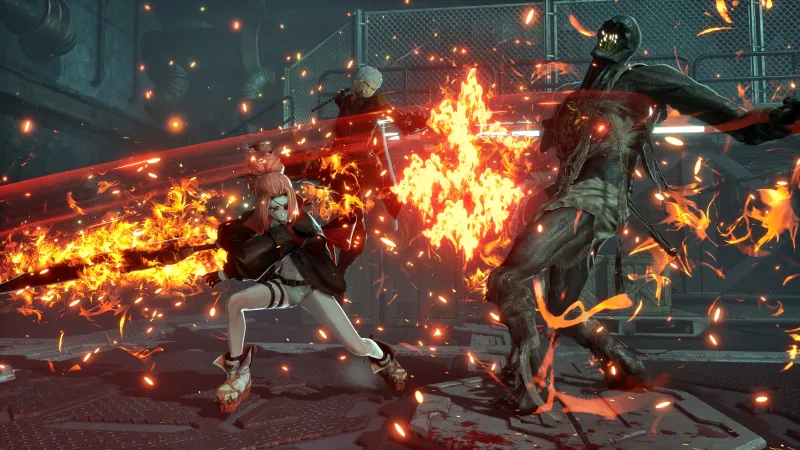
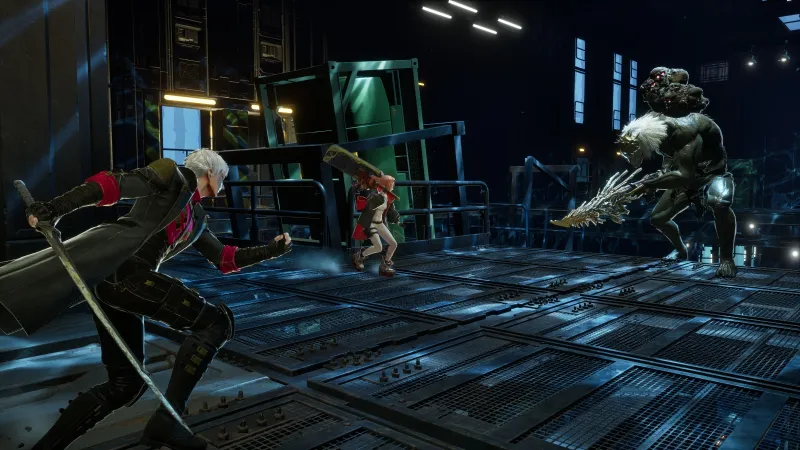
I spent most of my play session exploring a dungeon called the Sunken Pylon, an uninteresting and tricky-to-navigate multi-story industrial facility. Josée Anjou rules this area, and to gain her trust, I must help her locate and eradicate whatever is polluting the area’s water. You can hit a button to display a golden path towards the objective, but it also shows the route already traveled in blue. This can result in a scribbled mess of glowing pathlines that I sometimes find difficult to parse. In traditional Soulslike fashion, special checkpoints replenish health while resurrecting slain enemies. You can also warp to a special realm called the Confluence to chat with Lou, who may share insights on the situation at hand.
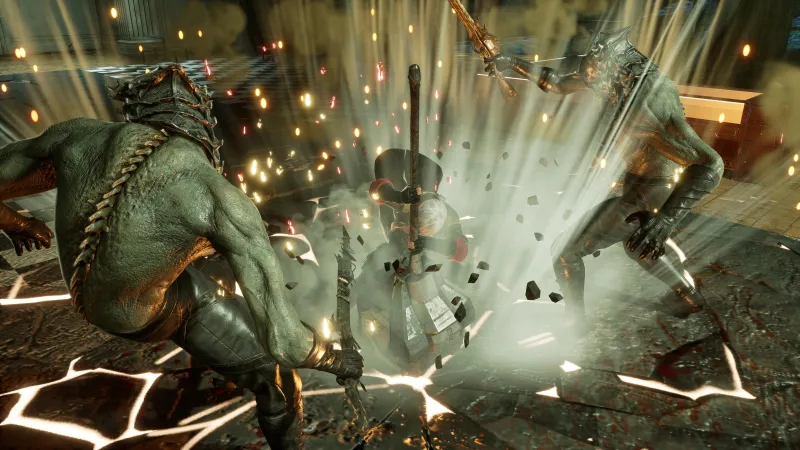
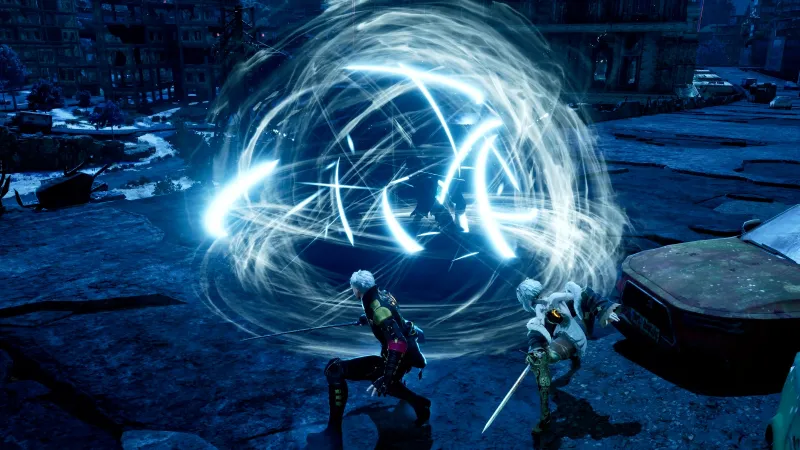
The melee combat on its own is passable but unremarkable despite having access to a bevy of different weapons, from dual swords to hammers to even a bayonet. Additional features help spice up the action. For example, you have your Jail, wearable equipment Bandai describes as this game’s equivalent of Code Vein’s Blood Veil. Jails enable hunters to use Formae, supernatural weapon abilities, and allow players to execute Drain Attacks, turning their arm into a beast-like claw to siphon a resource from enemies called Ichor.
Ichor fuels Formae, and these attacks vary based on the equipped weapon. Formae can be a powerful and flashy weapon attack, creating defensive shields and other stat buffs, or unleashing projectile attacks, among many others. Thus, you’ll want to drain Ichor from enemies regularly to continue unleashing Formae during battle. Though I’m unfamiliar with how, Bandai flaunts that the Blood Code system has also been reworked. Like in the last game, Blood Codes offer multiple combat styles and sport six attributes that impact the player’s stats, such as your base defense and your max Ichor.
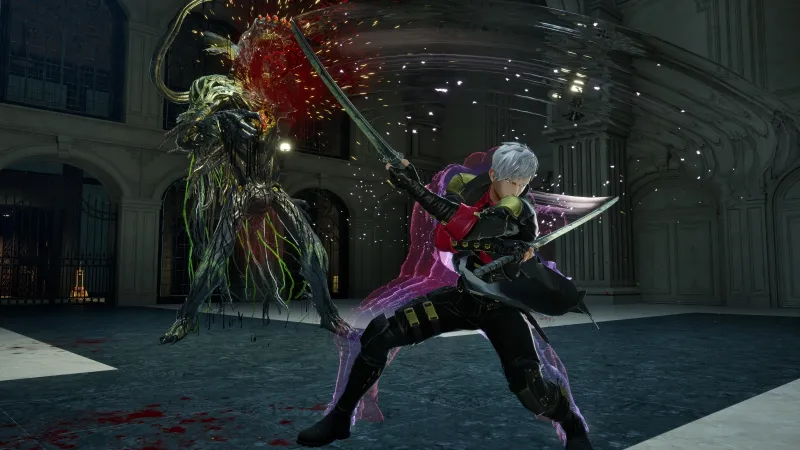
My favorite aspect of Code Vein II’s combat is the Partner system, which lets you summon a second character to aid in battle. Think of Spirit Ashes in Elden Ring, but if they were always available and lived inside your Jail. Partners offer an extra hand in battle and, sometimes more importantly, can draw the attention of deadlier foes while you deal damage uninterrupted. I spent most of my session taking down foes with Josée, who proved invaluable not only in battle, but also because she revived me whenever I took a killing blow, though this ability has limited uses.
You can recall partners at any time, called Assimilation. While you’re likely wondering why you would ever willingly fight alone, going solo has its benefits. Partners bestow stat upgrades thanks to a system called Link Traits, and each companion brings unique traits to the table. Partners also grant another meter called Link Points (LP), which is reduced when you take damage before your HP does. Neat, but I rarely took advantage of Assimilation as double-teaming threats was simply too valuable to give up, at least against the enemies I faced.
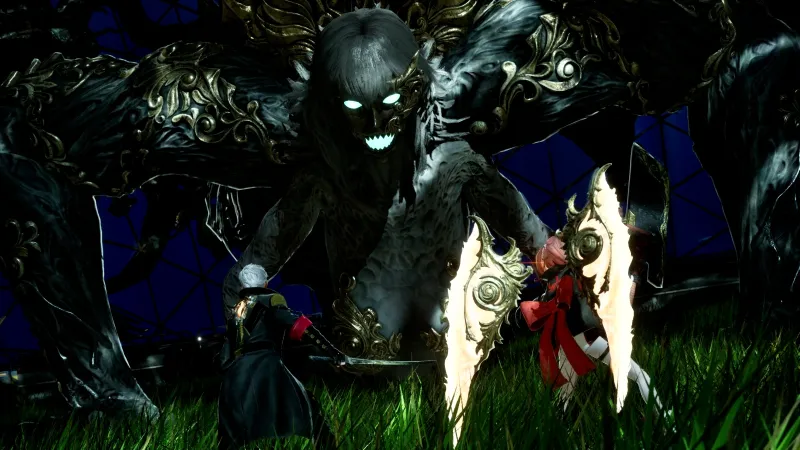
Cutting down all manner of monstrosities en route to my goal offers decent fun, but things picked up during the two boss encounters in the demo. In the first, I took on a deformed titanic beast called the Metagen Remnant – the source of the Sunken Pylon’s pollution. Resembling a woman grafted to a pair of grimy, giant arms and a long, toxin-spewing tail, this battle was a trial. If I kept my distance, the Remnant would unleash beams of fire from its mouth or rain a volley of fireballs from above. Try to get behind it, and the tail would spray poison, inflicting the Acid status effect if you linger too long. It takes me several attempts and provides an excuse to cycle through each Formae I have equipped. Staggering the creature lets me perform execution-style attacks to deal significant damage. It takes a few tries, but I eventually topple this gross creature thanks to some finesse and no shortage of help from Josée.
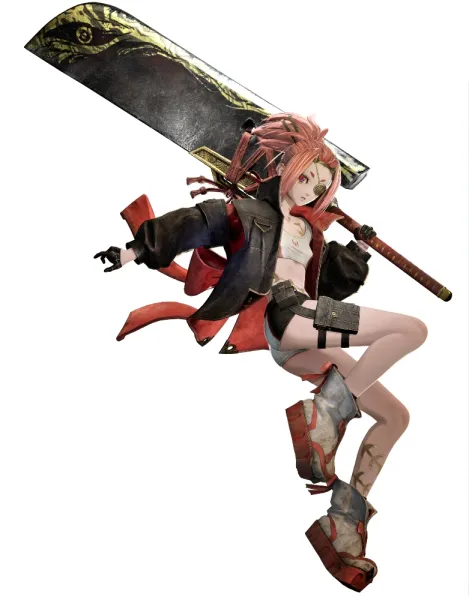
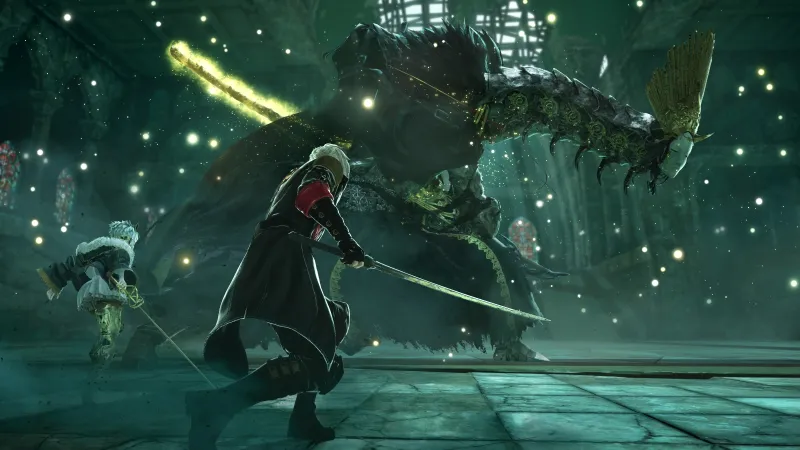
Later in my demo, time-traveling shenanigans return me to the present, leaving a grateful Josée behind to rebuild her domain. I go to unseal her in the present; unfortunately, several years and a series of unfortunate events befell Josée after I returned to my time. Thus, when she emerges from her cocoon in the present, her sadness has transformed into a giant, blind, masked sword-wielding demon. Begging for her death, she unwillingly comes at me with ruthless assaults from her oversized sword. I rely on Lou as my partner in this bout, and the two of us do our best to put Josée out of her misery. This battle became my favorite combat encounter of the demo, and though it’s challenging, the action combined with the story implications makes it an exciting bout. Toppling her feels like a real triumph and a big relief to Josée, who thanks me as she withers into nothingness.
According to Bandai, battling fallen heroes in this manner will be a recurring theme of Code Vein II. While they’re keeping the story details secret, they tease that the manner in which players alter time will determine how and when these confrontations play out, assuming they occur at all. Bandai wants Code Vein II to be a tragic story filled with heavy moments, such as witnessing a heroic ally succumb to darkness. According to Bandai, it's this focus on character drama that defines and separates Code Vein II from the litany of Soulslikes.
I conclude my Code Vein II demo not bowled over by what I experienced, but still intrigued by its time-bending premise. The idea of tackling heroes-turned-monsters who may only become such because of how I choose to fiddle with time is fascinating. However, I am worried about the plot falling into the trap many time-travel stories have of becoming too complex and up its own butt for its own good. We’ll see if Code Vein II has what it takes to make a greater impression than its predecessor, but I respect how hard it’s swinging for the fences.
2026 Video Game Release Schedule
If you're wondering what games are coming up in 2026, we've put them all in one convenient location. This list will be continually updated to act as a living, breathing schedule as new dates are announced, titles are delayed, and big reveals happen. This should help you plan out your next year of gaming and beyond.
As the gaming calendar is constantly changing, we highly recommend you bookmark this page. You'll likely find yourself coming back to find out the most recent release schedule for the most anticipated games across PC, consoles, VR, and mobile devices. If you notice that we've missed something, feel free to let us know! Please note that games will not get assigned to a month until they have confirmed release dates.
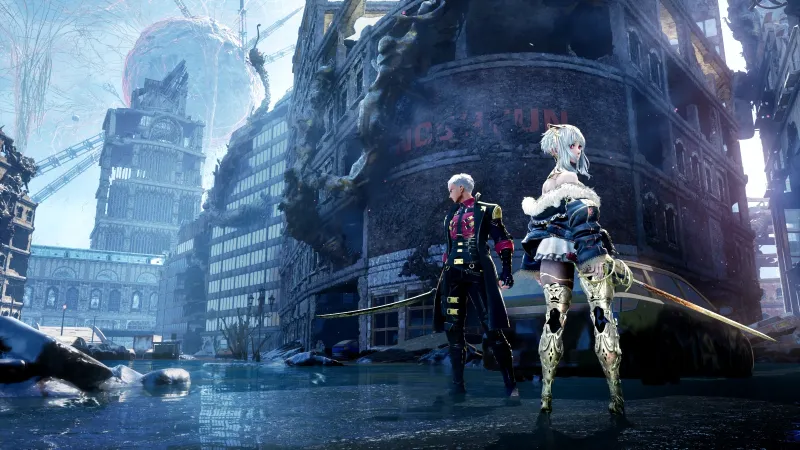 Code Vein II
January
DuneCrawl (PC) – January 5 Suika Game Planet (Switch 2, Switch) – January 5 StarRupture (Early Access) (PC) – January 6 Fairy Tail: Dungeons (Switch) – January 7 Heartopia (PC, iOS, Android) – January 7 I Am Future (PlayStation 5, Xbox Series X/S, Switch) – January 8 Pathologic 3 (PC) – January 9 Big Hops (PlayStation 5, Switch, PC) – January 12 Quarantine Zone: The Last Check (PC) – January 12 Hytale (Early Access) (PC) – January 13 Animal Crossing: New Horizons (Switch 2) – January 15 – Read review DreadOut Remastered Collection (Xbox One) – January 15 The Legend of Heroes: Trails Beyond the Horizon (PlayStation 5, Switch 2, PlayStation 4, Switch, PC) – January 15 BrokenLore: Unfollow (PlayStation 5, Xbox Series X/S, PC) – January 16 Ghost Cam (Quest 3, Quest 2, Quest, PC) – January 19 On-Together (PC, Mac) – January 19 Hack and Climb (PC) – January 20 MIO: Memories in Orbit (PlayStation 5, Xbox Series X/S, Switch 2, Switch, PC) – January 20 – Read review Silt (iOS, Android) – January 20 – Read review TR-49 (PC, Mac, iOS) – January 21 Arknights: Endfield (PlayStation 5, PC, iOS, Android) – January 22 Dynasty Warriors: Origins (Switch 2) – January 22 Final Fantasy VII Remake Intergrade (Xbox Series X/S, Switch 2) – January 22 – Read review Hermit and Pig (PC) – January 22 Perfect Tides: Station to Station (Switch, PC) – January 22 Escape from Ever After (PlayStation 5, Xbox Series X/S, Switch, PC) – January 23 Highguard (PlayStation 5, Xbox Series X/S, PC) – January 26 Winnie's Hole (Early Access) (PC) – January 26 Speedball (PlayStation 5, Xbox Series X/S, PC) – January 27 Core Keeper (Switch 2) – January 28 Dispatch (Switch 2, Switch) – January 28 – Read review Cairn (PlayStation 5, PC) – January 29 Don’t Stop, Girlypop! (PC) – January 29 Grid Legends (Switch 2) – January 29 I Hate This Place (PlayStation 5, Xbox Series X/S, Switch, PC) – January 29 Our Burial Dolls Remastered (PlayStation 5, PlayStation 4, PC) – January 29 The Perfect Pencil (Switch, PC) – January 29 Code Vein II (PlayStation 5, Xbox Series X/S, PC) – January 30 Front Mission 3: Remake (PlayStation 5, Xbox Series X/S, PlayStation 4, Xbox One, PC) – January 30 Our Burial Dolls Remastered (Switch) – January 30 The 9th Charnel (PlayStation 5, Xbox Series X/S, PC) – January 30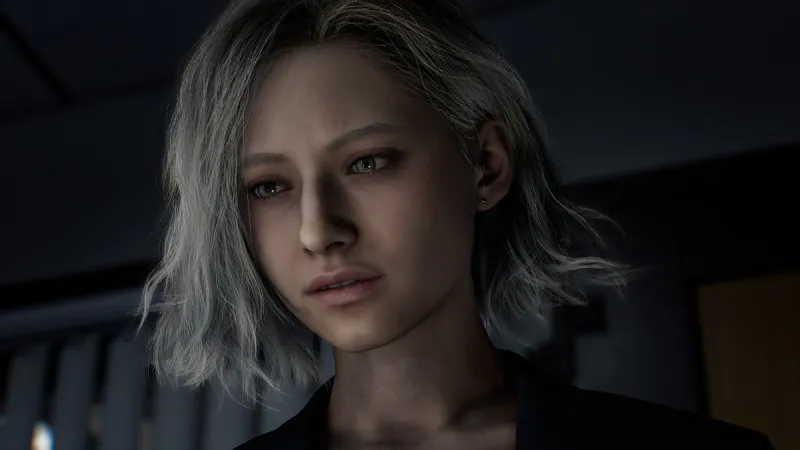 Resident Evil Requiem
February
Starsand Island (PlayStation 5, Xbox Series X/S, Switch 2, PC) – February 1 Dragon Quest VII Reimagined (PlayStation 5, Xbox Series X/S, Switch 2, Switch, PC) – February 5 PUBG: Blindspot (Early Access) (PC) – February 5 Sid Meier's Civilization VII (Mac, iOS) – February 5 Tomb of the Bloodletter (PC) – February 5 My Hero Academia: All's Justice (PlayStation 5, Xbox Series X/S, PC) – February 6 Nioh 3 (PlayStation 5, PC) – February 6 PGA Tour 2K25 (Switch 2) – February 6 Mewgenics (PC) – February 10 Relooted (Xbox Series X/S, PC) – February 10 Romeo is a Dead Man (PlayStation 5, Xbox Series X/S, PC) – February 11 BlazBlue Entropy Effect X (PlayStation 5, Xbox Series X/S, PC) – February 12 Mario Tennis Fever (Switch 2) – February 12 Ride 6 (PlayStation 5, Xbox Series X/S, PC) – February 12 Tomb Raider (iOS, Android) – February 12 – Read review Yakuza Kiwami 3 & Dark Ties (PlayStation 5, Xbox Series X/S, Switch 2, PlayStation 4, PC) – February 12 Clue: Murder by Death (PlayStation 5, Xbox Series X/S, Switch 2, Switch, PC) – February 13 High On Life 2 (PlayStation 5, Xbox Series X/S, PC) – February 13 Reanimal (PlayStation 5, Xbox Series X/S, Switch 2, PC) – February 13 Rune Factory: Guardians of Azuma (PlayStation 5, Xbox Series X/S) – February 13 Astrobotanica (Early Access) (PC) – February 16 Aerial_Knight's DropShot (PlayStation 5, Xbox Series X/S, PlayStation 4, Xbox One, PC) – February 17 Avowed (PlayStation 5) – February 17 – Read review Star Trek: Voyager - Across the Unknown (PlayStation 5, Xbox Series X/S, Switch 2, PC) – February 18 Death Howl (PlayStation 5, Xbox Series X/S, Switch) – February 19 – Read review Demon Tides (PC) – February 19 Love Eternal (PlayStation 5, Xbox Series X/S, PlayStation 4, Switch, PC) – February 19 Styx: Blades of Greed (PlayStation 5, Xbox Series X/S, PC) – February 19 Ys X: Proud Nordics (PlayStation 5, Switch 2, PC) – February 20 Rainbow Six Mobile (iOS, Android) – February 23 No Sleep For Kaname Date - From AI: The Somnium Files (PlayStation 5, PlayStation 4) – February 26 Tokyo Xtreme Racer (PlayStation 5) – February 26 Towerborne (PlayStation 5, Xbox Series X/S, PC) – February 26 Laysara: Summit Kingdom (PlayStation 5, Xbox Series X/S, PlayStation 4, Xbox One, Switch, PC) – February 27 Resident Evil 7: Biohazard (Switch 2) – February 27 – Read review Resident Evil Requiem (PlayStation 5, Xbox Series X/S, Switch 2, PC) – February 27 Resident Evil Village (Switch 2) – February 27 – Read review Tales of Berseria Remastered (PlayStation 5, Xbox Series X/S, Switch, PC) – February 27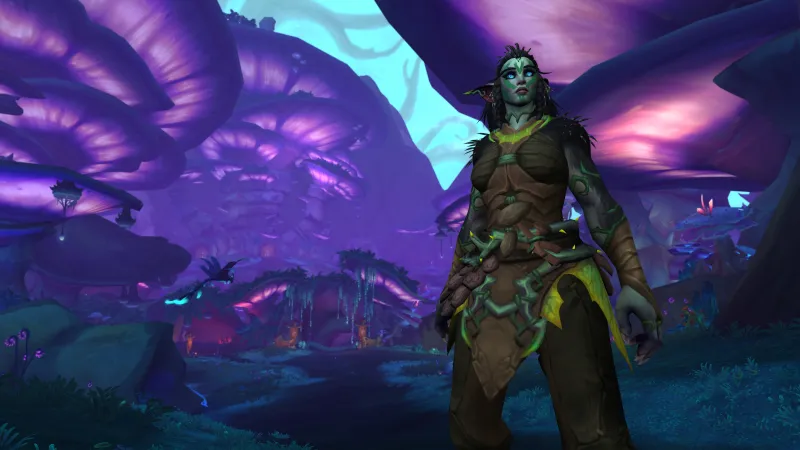 World of Warcraft: Midnight
March
World of Warcraft: Midnight (PC, Mac) – March 2 Marathon (PlayStation 5, Xbox Series X/S, PC) – March 5 Never Grave: The Witch and The Curse (PlayStation 5, Xbox Series X/S, PlayStation 4, Switch, PC) – March 5 Pokémon Pokopia (Switch 2) – March 5 Fatal Frame II: Crimson Butterfly Remake (PlayStation 5, Xbox Series X/S, Switch 2, PC) – March 12 John Carpenter's Toxic Commando (PlayStation 5, Xbox Series X/S, PC) – March 12 Replaced (Xbox Series X/S, PC) – March 12 Solasta II (Early Access) (PC) – March 12 Monster Hunter Stories 3: Twisted Reflection (PlayStation 5, Xbox Series X/S, Switch 2, PC) – March 13 Mr. Sleepy Man (PC) – March 17 Snoopy & The Great Mystery Club (Switch 2) – March 17 Crimson Desert (PlayStation 5, Xbox Series X/S, PC) – March 19 Dynasty Warriors 3 Complete Edition Remastered (PlayStation 5, Xbox Series X/S, Switch 2, Switch, PC) – March 19 Mouse: P.I. For Hire (PlayStation 5, Xbox Series X/S, Switch 2, Switch, PC) – March 19 Rhell: Warped Worlds & Troubled Times (PC) – March 19 Life is Strange: Reunion (PlayStation 5, Xbox Series X/S, PC) – March 26 Nutmeg! (PC) – March 26 Screamer (PlayStation 5, Xbox Series X/S, PC) – March 26 Mega Man Star Force Legacy Collection (PlayStation 5, Xbox Series X/S, PlayStation 4, Xbox One, Switch, PC) – March 27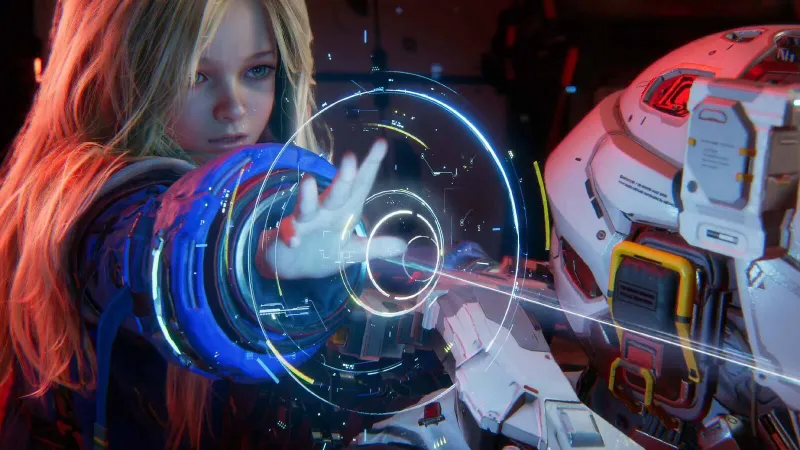 Pragmata
April
I Am Jesus Christ (PC) – April 2 Tiny Bookshop (PlayStation 5) – April 10 Before I Go (PlayStation 5, Xbox Series X/S, Switch, PC) – April 13 Cthulhu: The Cosmic Abyss (PlayStation 5, Xbox Series X/S, PC) – April 16 Masters of Albion (PC) – April 22 Tides of Tomorrow (PlayStation 5, Xbox Series X/S, PC) – April 22 Pragmata (PlayStation 5, Xbox Series X/S, Switch 2, PC) – April 24 Diablo IV: Lord of Hatred (PlayStation 5, Xbox Series X/S, PlayStation 4, Xbox One, PC) – April 28 Invincible VS (PlayStation 5, Xbox Series X/S, PC) – April 30 Saros (PlayStation 5) – April 30 007 First Light
May
Coffee Talk Tokyo (PlayStation 5, Xbox Series X/S, Switch, PC) – May 21 Paralives (Early Access) (PC) – May 25 007 First Light (PlayStation 5, Xbox Series X/S, Switch 2, PC) – May 27 Wandering Sword (PlayStation 5) – May 28 Lego Batman: Legacy of the Dark Knight (PlayStation 5, Xbox Series X/S, Switch 2, PC) – May 29 Halloween
September
Halloween (PlayStation 5, Xbox Series X/S, PC) – September 8 Phantom Blade Zero (PlayStation 5, PC) – September 9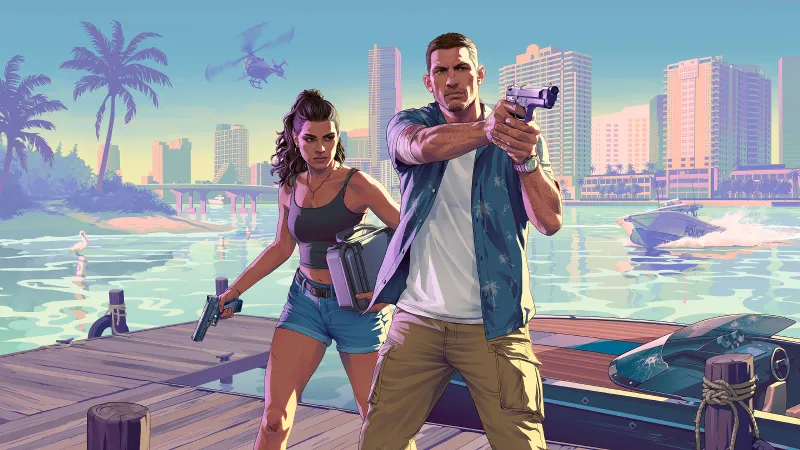 Grand Theft Auto VI
November
Grand Theft Auto VI (PlayStation 5, Xbox Series X/S) – November 19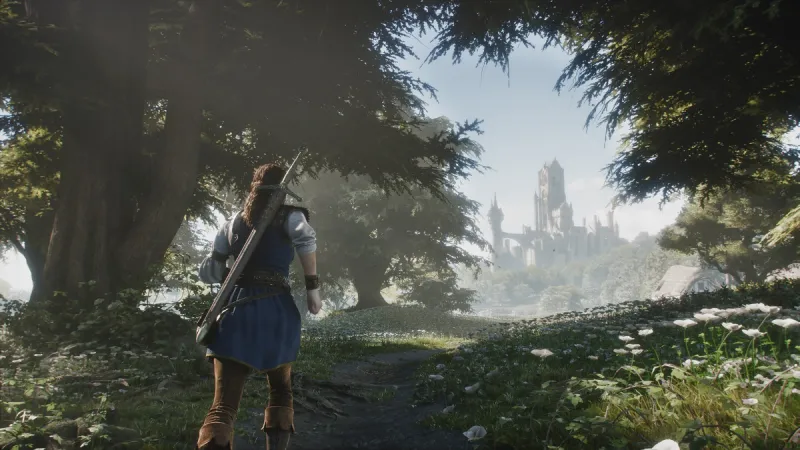 Fable
Fable
To Be Announced
33 Immortals (Xbox Series X/S, PC) Abashed (PC) Ace Combat 8: Wings of Theve (PlayStation 5, Xbox Series X/S, PC) Acts of Blood (PC) Aeterna Lucis (PlayStation 5, Xbox Series X/S, PlayStation 4, Xbox One, Switch, PC) Aether & Iron (PC) Agni: Village of Calamity (Xbox Series X/S, PC) Aion 2 (PC) Aniimo (Xbox Series X/S, PC, iOS, Android) Anima: Gate of Memories I & II Remaster (Switch 2) Aphelion (PlayStation 5, Xbox Series X/S, PC) Arcane Eats (PC) ArcheAge Chronicles (PlayStation 5, Xbox Series X/S, PC) Armatus (PlayStation 5, Xbox Series X/S, PC) Ashes of the Singularity II (PC) Astromine (PC) At Fate's End (PlayStation 5, Xbox Series X/S, PC) Australia Did It (PC) Avatar Legends: The Fighting Game (PlayStation 5, Xbox Series X/S, Switch 2, PlayStation 4, PC) Awaysis (Xbox Series X/S, PC) Battle Vision Network (PC, iOS, Android) Battlestar Galactica: Scattered Hopes (PC) Beast of Reincarnation (PlayStation 5, Xbox Series X/S, PC) Beastro (PlayStation 5, Xbox Series X/S, PC) Big Walk (PC) Blackfrost: The Long Dark 2 (PC) Blighted (PC) Blood: Refreshed Supply (Switch 2) Bloodstained: The Scarlet Engagement (PlayStation 5, Xbox Series X/S, PC) Blue Ridge Hunting (Early Access) (PC) BPM Bitcrushed (PlayStation 5, Xbox Series X/S, Switch, PC) BrokenLore: Ascend (PlayStation 5, Xbox Series X/S, PC) Bubsy 4D (PlayStation 5, Xbox Series X/S, Switch 2, PlayStation 4, Xbox One, Switch, PC) Buckshot Roulette (Xbox Series X/S) Building Relationships (PC) Carmageddon: Rogue Shift (PlayStation 5, Xbox Series X/S, Switch 2, PC) Caves of Qud (Switch) Chronicles: Medieval (PC) Chrono Odyssey (PlayStation 5, Xbox Series X/S, PC) Chronoscript: The Endless End (PlayStation 5, PC) Cinder City (PC) City of Dolorosa (PC) Clive Barker's Hellraiser: Revival (PlayStation 5, Xbox Series X/S, PC) Constance (PlayStation 5, Xbox Series X/S, Switch 2, Switch) Content Warning (Switch 2, Switch) Control Resonant (PlayStation 5, Xbox Series X/S, PC, Mac) Corpse Party II: Darkness Distortion (PlayStation 5, PlayStation 4, Switch, PC) Crashout Crew (PC) Crisol: Theater of Idols (PlayStation 5, Xbox Series X/S, PC) Crushed In Time (PC, Mac, iOS, Android) D-topia (PlayStation 5, Xbox Series X/S, Switch 2, Switch, PC) Damon and Baby (PlayStation 5, PlayStation 4, PC), Danchi Days (PC) Danganronpa 2x2 (PlayStation 5, Xbox Series X/S, Switch 2, Switch, PC) Darwin's Paradox (PlayStation 5, Xbox Series X/S, Switch 2, PC) Deadhaus Sonata (PC) Death the Guitar (PC) Decapolice (PlayStation 5, PlayStation 4, Switch) Decrepit (PC) Deep Rock Galactic: Rogue Core (Early Access) (PC) Deer & Boy (PlayStation 5, Xbox Series X/S, Switch, PC) Demi and the Fractured Dream (PlayStation 5, Xbox Series X/S, Switch 2, Switch, PC) Demons' Night Fever Denshattack! (PlayStation 5, Xbox Series X/S, PC) Dimhaven – The Lost Source (PC) Dinoblade (PC) Directive 8020 (PlayStation 5, Xbox Series X/S, PC) Dissidia Duellum Final Fantasy (iOS, Android) Dosa Divas: One Last Meal (PC) Dragon Quest Smash/Grow (iOS, Android) Dune: Awakening (PlayStation 5, Xbox Series X/S) Duskfade (PlayStation 5, Xbox Series X/S, PC) Echo Generation 2 (Xbox Series X/S, PC) Edge of Memories (PlayStation 5, Xbox Series X/S, PC) Elden Ring Tarnished Edition (Switch 2) End of Abyss (PlayStation 5, Xbox Series X/S, PC) Enshrouded (PC) Enter the Gungeon 2 (Switch 2, PC) Ereban: Shadow Legacy (PlayStation 5, Xbox Series X/S) Erosion (PlayStation 5, Xbox Series X/S, PC) EVE Vanguard (PC) Fable (Xbox Series X/S, PC) Fading Echo (PlayStation 5, Xbox Series X/S, PC) Fallout 4: Anniversary Edition (Switch 2) Fate/Extra Record (PlayStation 5, PlayStation 4, Switch, PC) Fatekeeper (Early Access) (PC) Fear Effect 2: Retro Helix (PlayStation 5, PlayStation 4, Switch, PC) Fields of Mistria (PC) Find Your Words (PC) Fire Emblem: Fortune's Weave (Switch 2) Forgotlings (PlayStation 5, Xbox Series X/S, PlayStation 4, Xbox One, PC) Forza Horizon 6 (Xbox Series X/S, PC), Frog Sqwad (PC) Game of Thrones: War For Westeros (PC) Gears of War: E-Day (Xbox Series X/S, PC) Glaciered (Switch 2, PC) Gnaw (PlayStation 5, Xbox Series X/S, Switch, PC) Go-Go Town! (Switch, PC) Gods, Death & Reapers (PC) Golf With Your Friends 2 (PC) Gothic 1 Remake (PlayStation 5, Xbox Series X/S, PC) Gothic 3 Classic (PlayStation 5, Xbox Series X/S, PlayStation 4, Xbox One) Gothic Classic (PlayStation 5, Xbox Series X/S, PlayStation 4, Xbox One) Gothic II Complete Classic (PlayStation 5, Xbox Series X/S, PlayStation 4, Xbox One) GreedFall 2: The Dying World (PlayStation 5, Xbox Series X/S, PC) Gungrave G.O.R.E. Blood Heat (PlayStation 5, Xbox Series X/S, PC) Halo: Campaign Evolved (PlayStation 5, Xbox Series X/S, PC) Hela (PlayStation 5, Xbox Series X/S, Switch 2, Xbox One, PC) Hell Let Loose: Vietnam (PlayStation 5, Xbox Series X/S, PC) Hello Again (PC) Hello Sunshine (PC) Heroes of Might & Magic: Olden Era (Early Access) (PC) Hitman: Absolution (Switch 2) – Read review Hollow Knight (Switch 2) – Read review Hordes of Fate : A Hand of Fate Adventure (PlayStation 5, Xbox Series X/S, Switch 2, PC) Human Fall Flat 2 (Switch 2, PC) Ikuma – The Frozen Compass (PlayStation 5, Xbox Series X/S, PC) Indiana Jones and the Great Circle (Switch 2) – Read review Infinitesimals (PlayStation 5, Xbox Series X/S, PC) Inkblood (PC) inKonbini: One Store. Many Stories (PlayStation 5, Xbox Series X/S, Switch, PC, Mac) Into The Fire (PC) Into the Unwell (PC) Inzoi (Early Access) (PlayStation 5) King of Tokyo (PlayStation 5, Xbox Series X/S, Switch, PC) Last Flag (PC) Lelu (PC) Limit Zero Breakers (PC, iOS, Android) Lords of the Fallen II (PlayStation 5, Xbox Series X/S, PC) Lorelei and the Laser Eyes (Switch 2) – Read review Lost Hellden (PlayStation 5, Xbox Series X/S, PlayStation 4, Xbox One, Switch, PC) Lou's Lagoon (Switch, PC) Lucid (PC) Luna Abyss (PlayStation 5, Xbox Series X/S, PC) Map Map: A Game About Maps (PC) Mariachi Legends (PlayStation 5, Xbox Series X/S, Switch, PC) Marvel Tōkon: Fighting Souls (PlayStation 5, PC) Marvel's Wolverine (PlayStation 5) Mira and the Legend of the Djinns (PC) Mirria (PC) Mistfall Hunter (Xbox Series X/S, PC) Mixtape (PlayStation 5, Xbox Series X/S, PC) Moomintroll: Winter’s Warmth (PC) Moonlight Peaks (PC) Mortal Shell II (PlayStation 5, Xbox Series X/S, PC) Mudang: Two Hearts (Xbox Series X/S, PC) NBA The Run (PlayStation 5, Xbox Series X/S, PC) Neath (PC) Neverway (Switch, PC) Nivalis (PC) No Straight Roads 2 (PC) Nocturnal 2 (Switch, PC) Once Human (PlayStation 5, Xbox Series X/S) Onimusha: Way of the Sword (PlayStation 5, Xbox Series X/S, PC) Ontos (PlayStation 5, Xbox Series X/S, PC) Opus: Prism Peak (Switch 2, Switch, PC) Orbitals (Switch 2) Order of the Sinking Star (PC) Out of Words (PlayStation 5, Xbox Series X/S, PC) Outbound (PlayStation 5, Xbox Series X/S, Switch 2, Switch, PC) Outward 2 (PC) Over the Hill (PlayStation 5, Xbox Series X/S, Switch 2, PC) Palworld (PlayStation 5, Xbox Series X/S, Xbox One, PC, Mac) People of Note (PlayStation 5, Xbox Series X/S, PC) Petal Runner (PC) Phasmophobia (PlayStation 5, Xbox Series X/S, PC) Pigeon: A Love Story (PC, Mac) Planet of Lana II: Children of the Leaf (PlayStation 5, Xbox Series X/S, Switch 2, PlayStation 4, Xbox One, Switch, PC) Pokémon Champions (Switch, iOS, Android) Polyaris (PC) Pony Island 2: Panda Circus (PC) Prehistoric Kingdom (PC) Professor Layton and the New World of Steam (Switch 2, Switch) Project Evilbane (PC), Project Evilbane (PC), (Xbox Series X/S) Project M (Switch 2, Switch) Puppergeist (Xbox Series X/S, PC) Quest Master (Switch, PC) R-Type Tactics I • II Cosmos (PlayStation 5, Xbox Series X/S, Switch 2, PlayStation 4, Switch, PC) Recur (PC) Resonance: A Plague Tale Legacy (PlayStation 5, Xbox Series X/S, PC) Rhythm Heaven Groove (Switch) Rising Heat (PC) Road Kings (PlayStation 5, Xbox Series X/S, PC) Rockbeasts (PlayStation 5, Xbox Series X/S, PC) RuneScape: Dragonwilds (PC) SacriFire (PlayStation 5, Xbox Series X/S, PlayStation 4, Xbox One, Switch, PC) Sayonara Wild Hearts (Switch 2) – Read review Scott Pilgrim EX (PlayStation 5, Xbox Series X/S, PlayStation 4, Switch, PC) Scramble Knights Royale (Xbox Series X/S, PC) Sea of Remnants (PlayStation 5, iOS, Android) Slay the Spire 2 (PC) Snap & Grab (PlayStation 5, Xbox Series X/S, PC) Solarpunk (PC) Solo Leveling: Arise Overdrive (PlayStation 5, Xbox Series X/S) Soulmask (PC) South of Midnight (PlayStation 5, Switch 2) – Read review Sparkball (PC) SpeedRunners 2: King Of Speed (PlayStation 5, Xbox Series X/S, Switch, PC) Springs, Eternal (PC) Sprint City (Early Access) (PC) Squadron 42 (PC) Star Wars Zero Company (PlayStation 5, Xbox Series X/S, PC) Star Wars: Galactic Racer (PlayStation 5, Xbox Series X/S, PC) Starseeker: Astroneer Expeditions (PlayStation 5, Xbox Series X/S, Switch 2, PC) Starship Troopers: Ultimate Bug War! (PlayStation 5, Xbox Series X/S, Switch 2, PC) Stupid Never Dies (PlayStation 5, PC) Subnautica 2 (Early Access) (Xbox Series X/S, PC) Sudden Strike 5 (PlayStation 5, Xbox Series X/S, PC) Super Mario Bros. Wonder (Switch 2) – Read review Super Meat Boy 3D (PlayStation 5, Xbox Series X/S, Xbox One, PC) TankRat (PlayStation 5, PC) Tanuki: Pon's Summer (Xbox Series X/S, Xbox One, Switch, PC) Teenage Mutant Ninja Turtles: Empire City (Quest 3, PC) Tenebris Somnia (PC) The Adventures of Elliot: The Millennium Tales (PlayStation 5, Xbox Series X/S, Switch 2, PC) The Artisan of Glimmith (PC) The Blood of Dawnwalker (PlayStation 5, Xbox Series X/S, PC) The Coma 3: Bloodlines (PC) The Dungeon Experience (PC) The Duskbloods (Switch 2) The Florist (PlayStation 5, Xbox Series X/S, PC) The Heirloom (PlayStation 5, Xbox Series X/S, PlayStation 4, Xbox One, Switch, PC) The Incident at Galley House (PC) The Last Gas Station (PC) The Lift (PC) The Mermaid Mask (PC) The Mound: Omen of Cthulhu (PlayStation 5, Xbox Series X/S, PC) The Occultist (PlayStation 5, Xbox Series X/S, PC) The Seven Deadly Sins: Origin (PlayStation 5, PC, iOS, Android) The Sinking City 2 (PlayStation 5, Xbox Series X/S, PC) The Witch's Bakery (PlayStation 5, Xbox Series X/S, Switch, PC) There Are No Ghosts at the Grand (Xbox Series X/S, PC) Thick As Thieves (PlayStation 5, Xbox Series X/S, PC) Timberborn (PC) Time Takers (PC) Tiny Metal 2 (PC) Toem 2 (PC) Tom the Postgirl (PC) Tomb Raider: Legacy of Atlantis (PlayStation 5, Xbox Series X/S, PC) Tomodachi Life: Living the Dream (Switch) Town of Zoz (PlayStation 5, Xbox Series X/S, Switch, PC) Toxic Crusaders (PlayStation 5, Xbox Series X/S, PlayStation 4, Xbox One, Switch, PC) Trails in the Sky 2nd Chapter (PlayStation 5, Switch 2, Switch, PC) Trivia Murder Party 3 (PC) Tropico 7 (PlayStation 5, Xbox Series X/S, PC) Tsarevna (PC) UN:Me (PC) Unshine Arcade (PC) Valheim (Early Access) (PlayStation 5) Valor Mortis (PlayStation 5, Xbox Series X/S, PC) Vampire Crawlers (PlayStation 5, Xbox Series X/S, Switch, PC, iOS, Android) Vexlands (PC) Virtue and a Sledgehammer (PC) Voidwrought (PlayStation 5, Xbox Series X/S) Wandering Sword (Switch 2, Switch) Warhammer 40,000: Boltgun 2 (PlayStation 5, Xbox Series X/S, PC) Warhammer 40,000: Dawn of War IV (PC) Warhammer Survivors (PC) Wax Heads (Xbox Series X/S, PC) Well Dweller (Switch, PC) Windblown (PC) Winx Club: The Magic Is Back (PlayStation 5, Switch, PC) Witchbrook (Xbox Series X/S, Switch 2, Xbox One, Switch, PC) Witchfire (PC) Wolfhound (PlayStation 5, Switch, PC) Woodo (PlayStation 5, Xbox Series X/S, Switch, PC) Yoshi and the Mysterious Book (Switch 2) Ys Memoire: Revelations in Celceta (Switch) Zero Parades: For Dead Spies (PlayStation 5, PC)Beastro Preview – A Tasty Sample Of This Cozy Cooking Deckbuilding Roguelike
Platform:
PlayStation 5, Xbox Series X/S, PC
Publisher:
Timberline Studio
Developer:
Timberline Studio
Release:
2026
Rating:
Everyone 10+
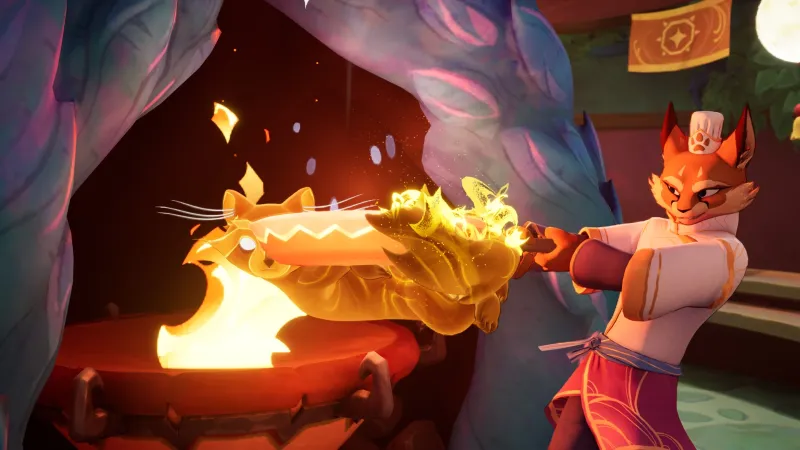
Like cooking a tasty dish, Beastro tosses several different ideas into a big pot and blends them into an enjoyable experience. During the week of The Game Awards, I played an hour-long demo of the cozy cooking deckbuilding roguelike and found it a fun sampler for the full course coming next year.
Beastro centers on a sous chef named Panko who resides in the peaceful, artisan village of Palo Pori. A protective wall surrounding the settlement keeps out the darkness stirring outside, namely monsters that have overtaken the wilds. When Panko’s teacher goes missing, he receives help in the form of a guardian spirit named Flambe, a raccoon-like living flame. In a fun twist, Panko’s job isn’t to save the town but rather to run a restaurant and feed the band of heroes, called Caretakers, whose job is to venture beyond the wall to confront the darkness. By helping them, Panko may be able to find his lost mentor.
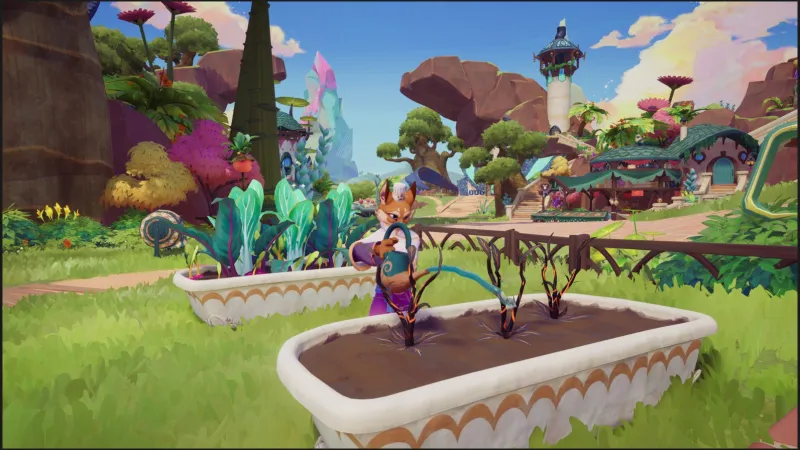
The game’s day-to-day structure reminds me of Dave the Diver’s, in that each day is divided into three segments. The morning begins in a laid-back fashion, as players gather ingredients in preparation for the restaurant’s opening. I enjoyed strolling through the scenic village to pick up grubs to feed chicken-like birds, catch fish at the pier, and tend to a garden of crops. It’s standard cozy fare, but it’s a nice calm before the busier storm of running the restaurant.
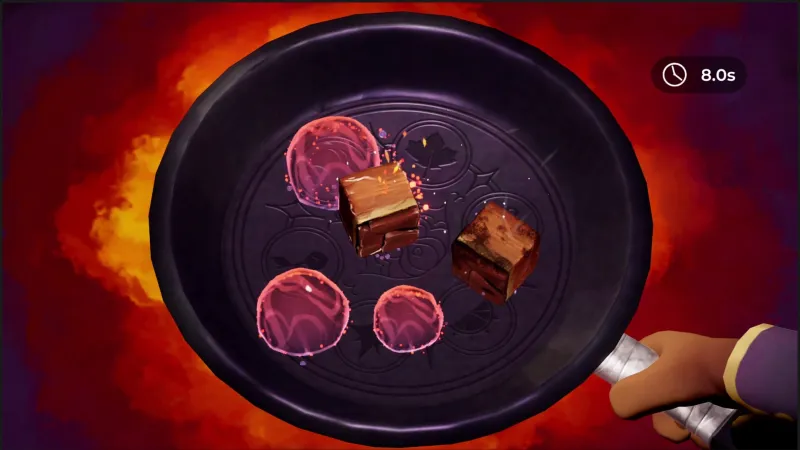
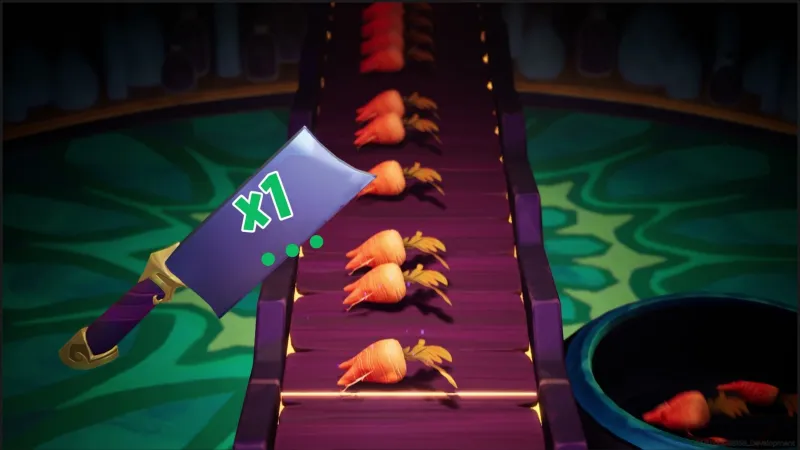
Once you’ve gathered your desired ingredients, it’s time to open your eatery to the masses. After determining the menu based on the ingredients you’ve obtained, preparing dishes became my favorite activity. Cooking unfolds as fun, carnival-like mini-games. I chopped veggies as they quickly descended a long cutting board, offering an enjoyable test of speed and timing. Sauteeing involves skillfully turning the pan to keep food from touching harmful pan bubbles. Boiling requires shooting ingredients like a basketball into three different pots, with highlighted pots netting a higher score (note to culinary novices: please never chuck food into boiling pots of water). Completed dishes must then be quickly delivered to patrons. Easy peasy, though Caretakers have more specific tastes and introduce more strategic depth to recipe crafting.
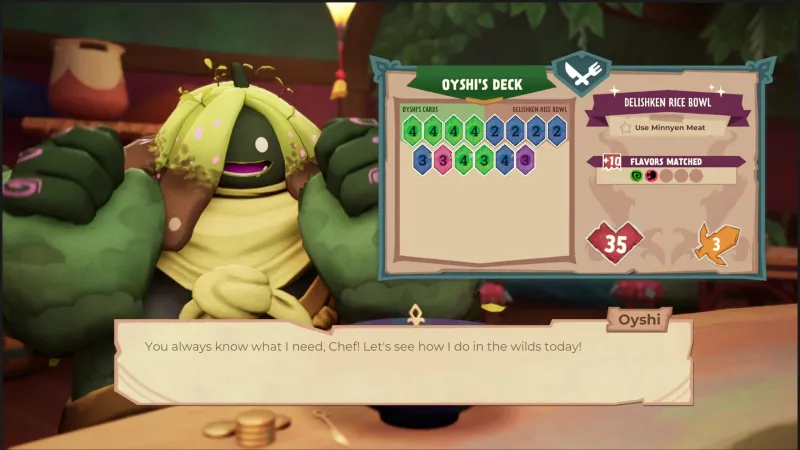
A Caretaker with a reservation arrives during each dinner service, eager for a good meal to fuel their excursions beyond the wall. During my service, a friendly Caretaker named Oyshi strolls in requesting a dish that satisfies his particular craving for eggs. Feeding Caretakers builds their card deck, which they’ll use to combat monsters during expeditions (more on this soon). Step 1 is selecting a recipe base by placing Tetris-shaped ingredients with flavor profiles on a grid. Ingredients have one of five flavors: Umami, Salty, Sour, Bitter, or Sweet. These flavors also have a weight that determines how strongly they affect the flavor profile.
Adding ingredients changes the flavor profile of the dish, and the goal is to assemble a deck that matches a Caretaker’s likes and dislikes. Appealing to their tastes can provide health and attack boosts, as well as deepen your friendship with them. The finished deck will consist of the cards and abilities gained from eating. This mechanic sounds more complicated than it is, and I gained a stronger understanding of this system once I applied it to combat.
Closing the restaurant transitions the day into evening. It’s time to visit a Caretaker, Oyshi in this case, who will recount their adventure in the form of a cute puppet show. This initiates a standard roguelike adventure where you navigate branching paths filled with combat encounters and other pitstops en route to the end.
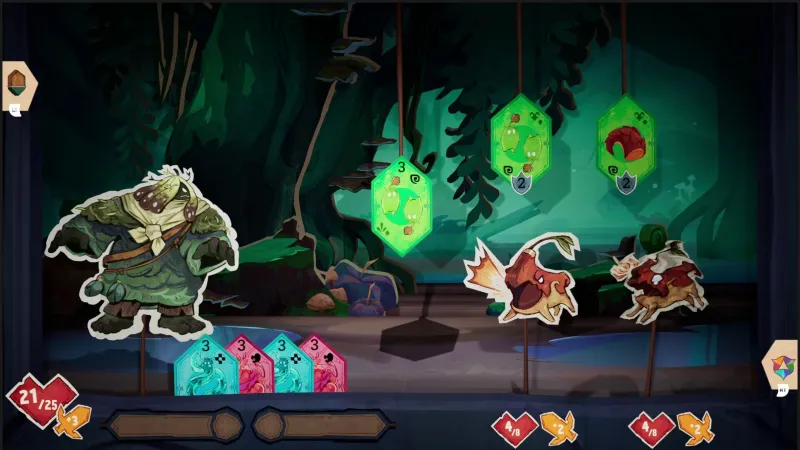
The turn-based battles see monsters play a card with a flavor suit, indicated by a color, and a number value. For example, an Umami card is green. Victory means playing a higher-value card of the same flavor profile as the monster. So in this example, I needed to play a green card with a higher number value. Winning a round deducts health points from the loser, based on my overall attack power, a separate metric indicated by a sword symbol. The dish I serve Oyshi grants a +3 attack power.
Enemy cards can be weakened by playing cards that balance their flavor. In this case, blue cards balance green ones, so playing the former will lower the latter's point value. You can also use cards to enhance the strength of others, based on a similar color-coordination comparable to Pokémon’s typing weaknesses/resistances. If you get understandably confused, a color wheel-like chart offers a simple visual breakdown of which flavors enhance or balance each other for easy reference. And if you’re not holding the cards you need to win a round, you can either discard your entire hand to draw five new cards or draw to fill empty hand spaces until you have five again. Otherwise, playing the wrong flavor card against an enemy will cause you to take the full brunt of their attack.
Although the combat system is a bit much to take in, I got the hang of the battles during the lengthy trek through the roguelike paths. It’s still ultimately my least favorite aspect of Beastro, at least during this early section, but it has the potential to evolve into something more engaging. Thankfully, I still enjoyed the cozier exercise of prepping ingredients, helping villagers, and running a restaurant. How these more leisurely activities evolve will be key, as the daily loop will need to be consistently engaging and surprising to keep me interested in the long haul. Beastro is a creative confluence of gameplay ideas, and I’m hoping it blends into an experience as rich and delicious as Panko’s dishes when it arrives in 2026. And if you can't wait until then, there's a Steam demo you can play right now!
Finding The Game: What Video Games Can Learn From Improv Comedy
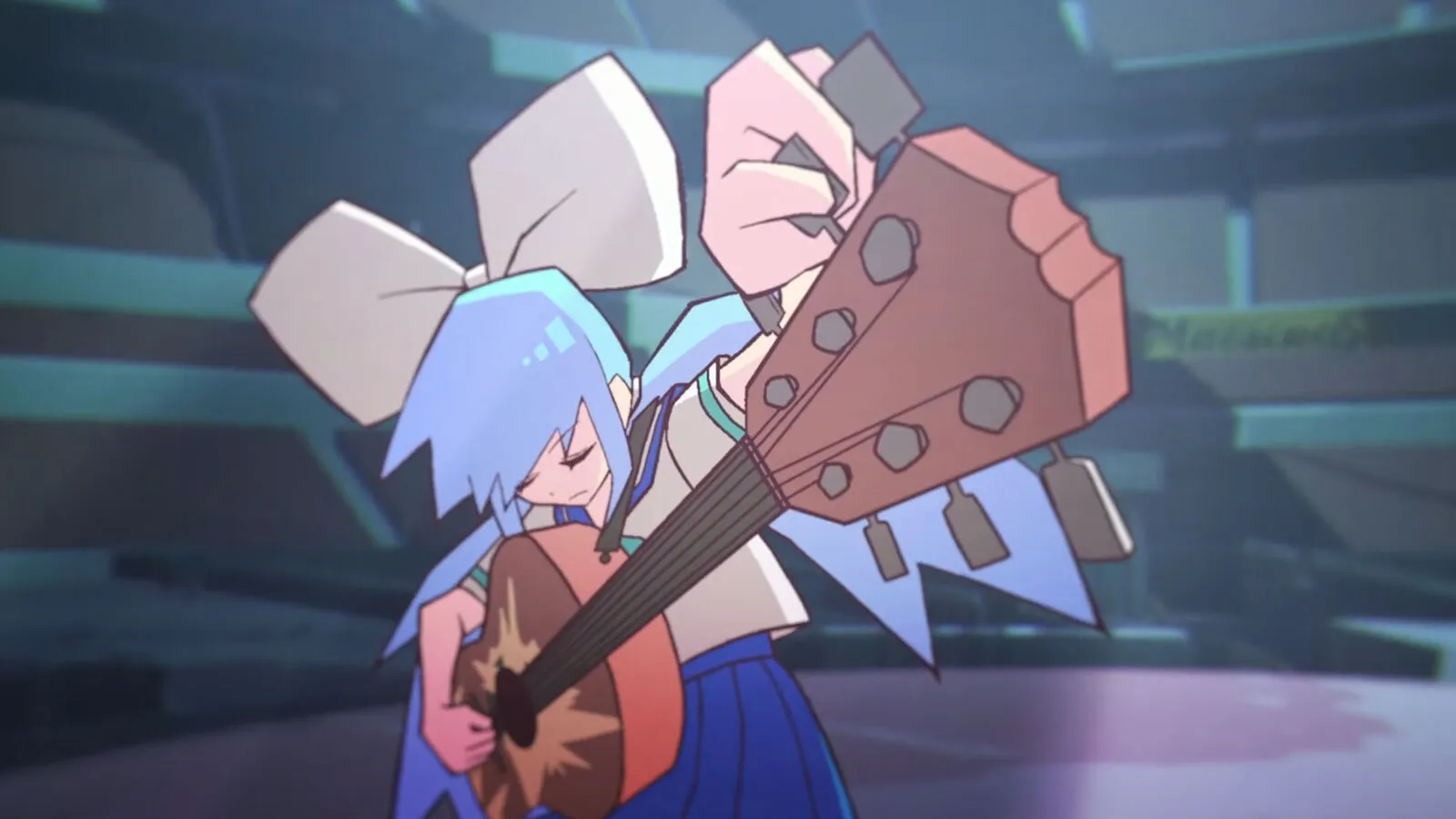
A few weeks ago, I booted up the narrative-driven rhythm game Unbeatable for the first time and was slowly disappointed. You play an entire slowly paced chapter before you even do your first rhythm gameplay, and the story is vague and disjointed up until that point. For some reason, my disappointment felt familiar, but it wasn't just an emotion tied to video games. Eventually, I realized that I felt the same way I feel when I'm watching a bad scene of improvised comedy.
 UNBEATABLE
I've been taking classes and performing at The Black Box Improv Theater for the past year or so, and while I've had plenty of funny scenes, I've been in my fair share of train wrecks as well. When you're in those early stages of an unsuccessful scene, you desperately try to grasp something funny in hopes of making that psychic link with your teammates that happens when you have a good, coordinated scene. But when you're unsuccessful, there's usually one specific reason: you didn't "find the game." Video games with slow, boring intros have this same problem.
Most people are familiar with "yes, and," the first rule of improv, but that's just a guiding principle of action, not an instant recipe for comedy. Heightening, the idea of making things "bigger," is usually what makes a scene funny. The quintessential example of this is the chocolate conveyor belt scene from I Love Lucy – as more chocolate comes out, Lucy has to take increasingly drastic measures to manage it. A more recent example is the substitute teacher sketch from Key & Peele (though any of their sketches would work here). As the teacher continues to mispronounce simple names, he gets more and more enraged. If you can think of your favorite scene from a sitcom or comedy sketch, there's a good chance you'd be able to break it down into an idea that's heightened over time.
The pattern of heightening a behavior or quirk is known as "the game." In the aforementioned substitute teacher sketch, the game is that Key's character continues to mispronounce names. It's a load bearing component of the scene, providing structure and a pattern to follow or subvert. The difference between the above examples and improv, however, is that the game in improv has to be "found," agreed upon by the performers on stage, and then executed. For example, if I start a scene by obsessing over my big dumb hat and someone else joins the scene bragging about an even bigger, dumber hat, we've implicitly agreed upon and "found" the game.
Of course, it's all more nuanced and complex in practice. Not every game is automatically funny, and not every concept you introduce is worth being heightened, so it can take a few lines to feel out which direction the scene should go. Crucially, however, taking too long to find or agree on a game stalls the scene and makes it feel stale. It's the backbone of that style of comedy, and without finding a game, it's very difficult to find success.
What does this have to do with video games? It's simple: get to the point. Most games are not concerned with comedy, but "the game" in this context is probably best redefined as "the gameplay loop." With few exceptions, a game that has you actively engaging with its core mechanics as quickly as possible is almost always a better game. The long-form structure of video games allows you to go back in and fill in narrative or complex mechanical gaps over time, and the sooner you "get" what a game is going for, the sooner you can decide whether you like it or not. Like with an improv scene, the longer you delay that moment, the less likely you are to keep a potential fan long enough to actually enjoy the art.
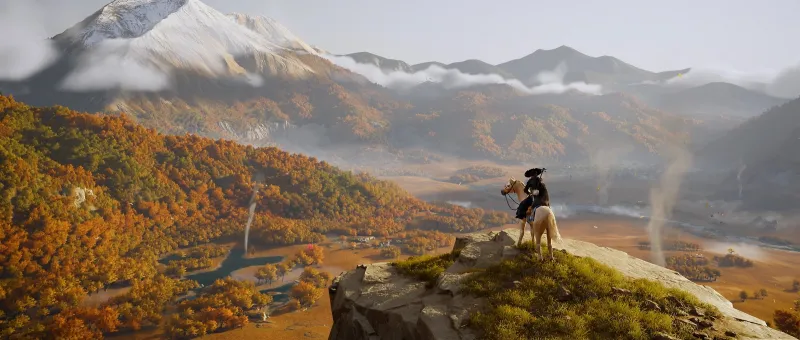
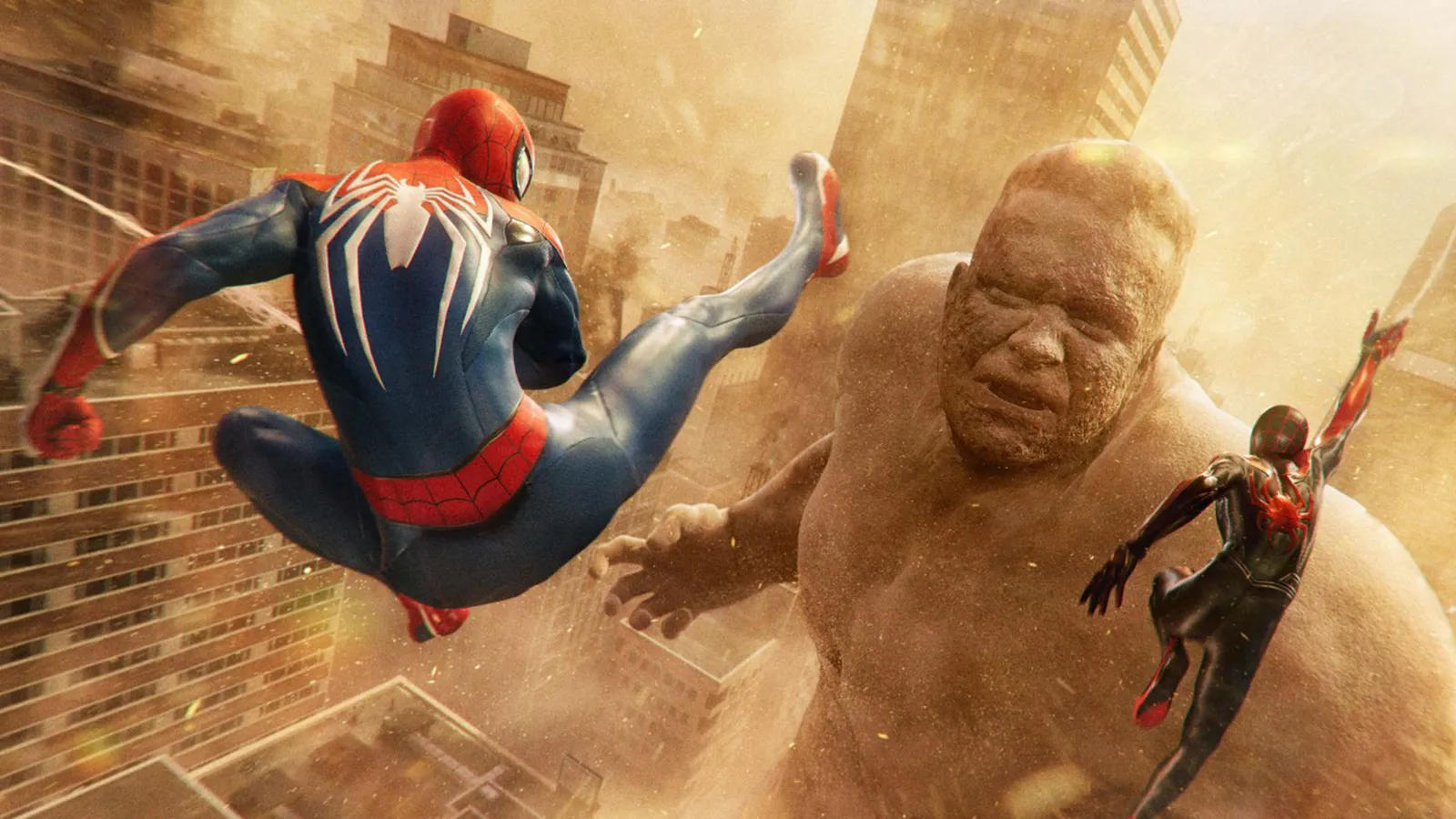
A lot of Sony's first-party titles are excellent at this. Ghost of Yōtei is an especially good example, skipping right to the promise of the premise and putting you on a horse in an uninhibited open field within the opening twenty minutes. Insomniac's trio of Spider-Man games is another perfect example; all three games have players swinging across the city towards a major villain within just five minutes of starting a new save file. You don't just understand the game's premise and core mechanics; you get to experience a microcosm of the game itself, and get a few dozen hours to see that concept executed on a grander scale.
 Marvel's Spider-Man 2
Like improv, however, this is easier said than done, partly because narrative single-player games have to balance "the game" of the mechanics and the intro to the story. Both require a bit of build-up, either as tutorials or exposition, and getting either right is certainly a challenge. Both of the aforementioned good examples, however, merge these challenges into one introductory mission to great success. The alternative is something like Clair Obscur: Expedition 33, where proper combat takes a little bit to show up, but the world and character building are in-depth and interesting right away. Hades and Hades 2 take the opposite approach, instead throwing players into a run to learn the ropes of gameplay before slowing down and really establishing the plot.
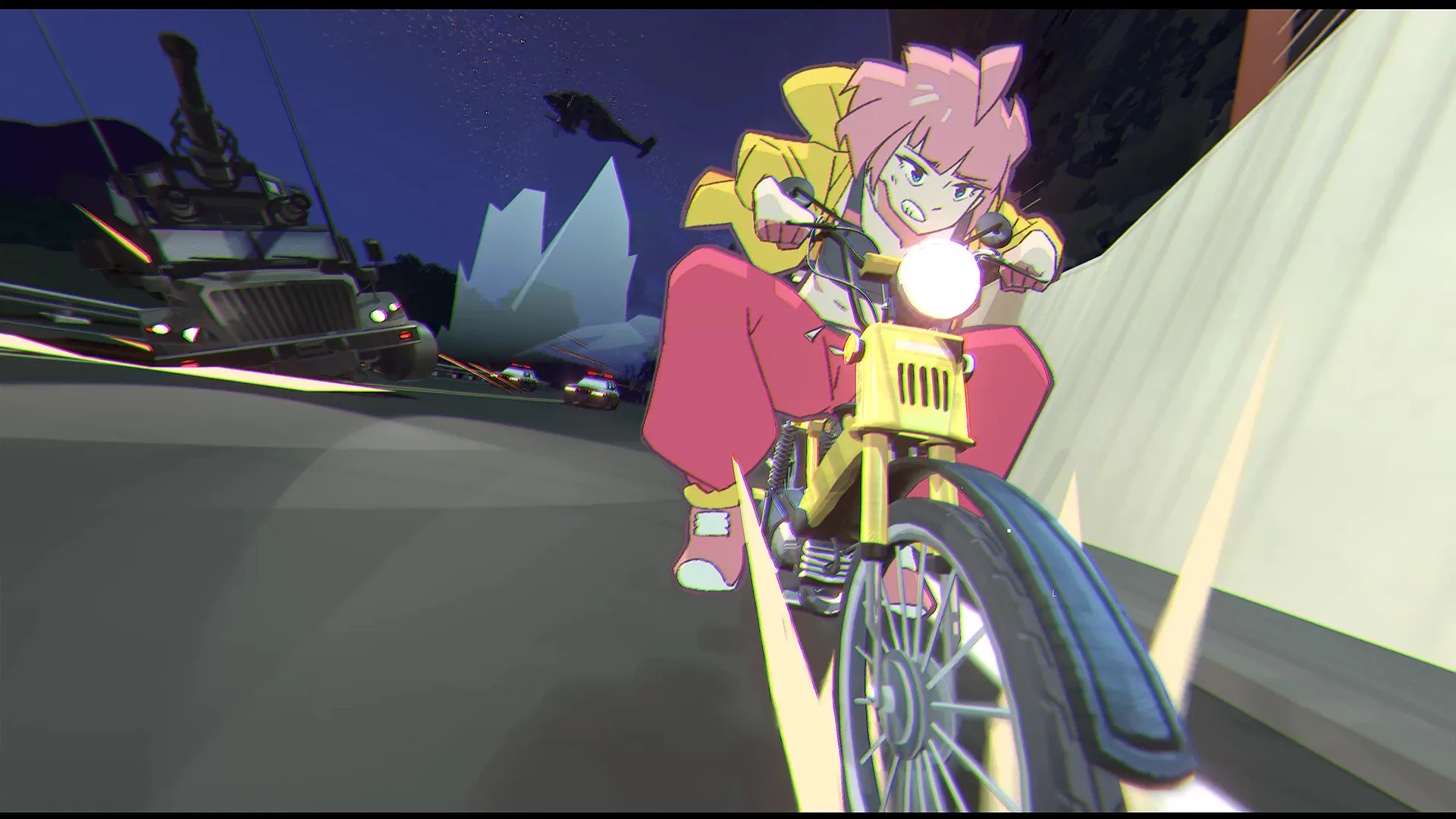
Which brings us back to Unbeatable, a game that struggles on both fronts. Rhythm gameplay only appears at the very end of the first chapter, and the narrative content that leads up to it is slow and meandering, simultaneously holding key plot elements too close to its chest (who are these characters? what is this world?) and spending too long on the details that seem to matter less. I wouldn't mind the story if I was having fun playing, and I wouldn't mind the lack of playing if I enjoyed the story, but waiting for both at the same time just doesn't work. This doesn't necessarily make Unbeatable a terrible game (I haven't played enough of it to make that judgment call), but I'm certainly not a fan of the intro, and with so much else to play, I chose to shelve it in favor of something else.
 UNBEATABLE
The huge number of games on the market is the reason this matters so much. Between game subscriptions like Game Pass, digital sales that list massive games for extremely low prices, countless free-to-play multiplayer games, and the rising number of games released each week, there's always something else you could be playing. Starting a game 20 years ago usually meant you'd already bought it and you were committing to it, but that commitment is much harder to come by nowadays. If a game's intro is slow or uninteresting, there's more incentive to swap to something else than ever before, so developers are tasked with making the game as appealing as possible from the get-go.
Of course, improv and video games are not a one-to-one comparison. If you wait too long to find the game in an improv scene, it just won't work, but games can always bounce back over time. Pokémon games (and many other JRPGs, but especially Pokémon) have had some of the slowest, least interesting intros for decades, but each one still sells millions and millions of copies. It's not a rigid requirement, but a strong preference. As someone who's been on and off the stage for awkward improv scenes that can't find their footing, I really appreciate the ones that find the game, get to the point, and keep the audience laughing. And as someone who critiques games for a living, I appreciate a video game with the same goals in mind.