Reading List
The most recent articles from a list of feeds I subscribe to.
Mewgenics Hits 1 Million Copies Sold
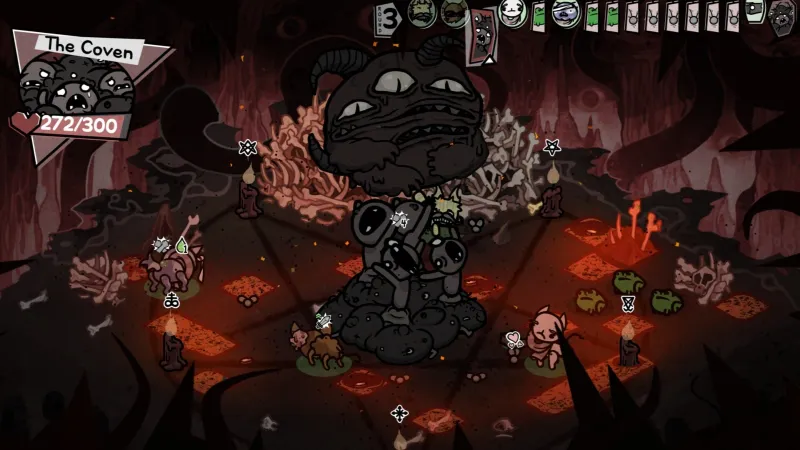
Mewgenics is off to a roaring start. The cat-breeding strategy game launched on February 10 after spending over a decade in on-and-off development to positive reviews. Mere hours after its release, Mewgenics recouped its development cost. One week later, and it’s now officially a million seller.
The game's co-creator, Tyler Glaiel, shared a simple post on social media announcing Mewgenics has hit 1 million copies sold; an impressive milestone given it's only been on sale for seven days and is available only on Steam.
Mewgenics comes from The Binding of Isaac and Super Meat Boy creator Edmund McMillen and his development partner, Tyler Glaiel (The End is Nigh), and is a roguelike turn-based strategy game that sees players breed parties of cats to bring into ever-changing battles. Players and critics have embraced the beefy adventure (which can take up to 200 hours to complete), boasting a “Very Positive” user review on Steam and an 89 Metacritic score.
We poured dozens of hours into Mewgenics for our review, which you can read right here. Game Informer subscribers can also learn more about Mewgenics’ creation and long road to release in this deep dive feature from last November.
The Big Magic The Gathering x TMNT Preview: A Video Game-Themed Commander Deck, Pizza Lands, A New Multiplayer Format, And More
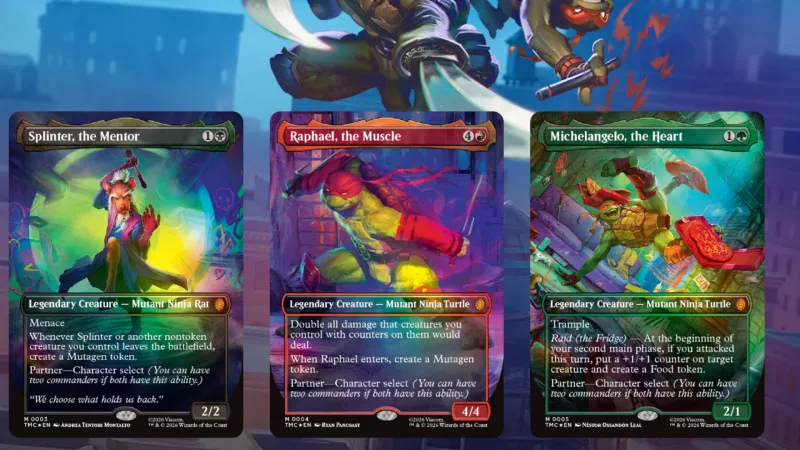
Love it or hate it, Wizards of the Coast has leaned hard into its Universes Beyond subset of Magic: The Gathering cards as a way to collaborate with all manner of brands and IP, including Final Fantasy, Avatar: The Last Airbender, Marvel's Spider-Man, and soon, the Teenage Mutant Ninja Turtles. This TMNT-themed set is an expansive release hitting card shops on March 6, and it includes the usual gamut of play and collector boosters, a Commander deck, chase cards, and more.
Ahead of its launch next month, I attended a virtual preview to learn from the card game makers behind this set about its narrative design, its video game-themed deck, a new multiplayer cooperative format for four players, and so much more. There's a lot here, and I have a lot of card previews to show you, so get your pen and paper ready, turn on your deckcrafting brain, and enjoy!
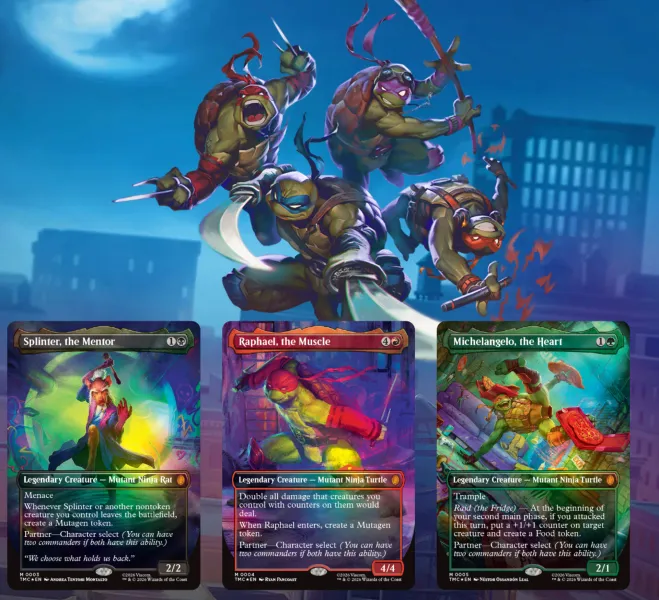
Wizards of the Coast senior narrative designer and TMNT narrative design lead Crystal Frasier began the preview explaining her role in designing this set, stating, "We're incredibly lucky with TMNT that a lot of our artists were already huge fans of the property, so a lot of them went above and beyond." As Magic: The Gathering fans already know, every card has just a hint of storytelling happening, even outside of the sometimes-included flavor text, and that hasn't changed with this set.
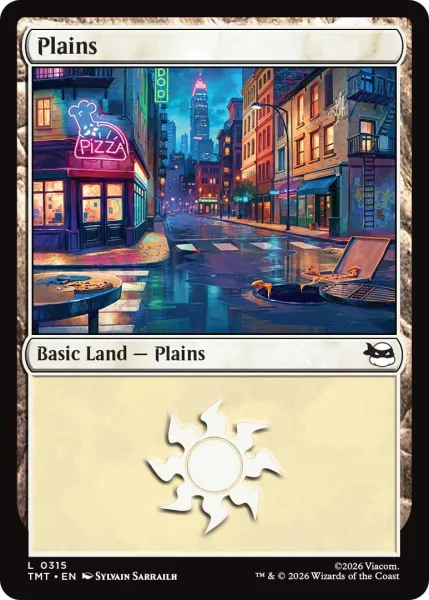
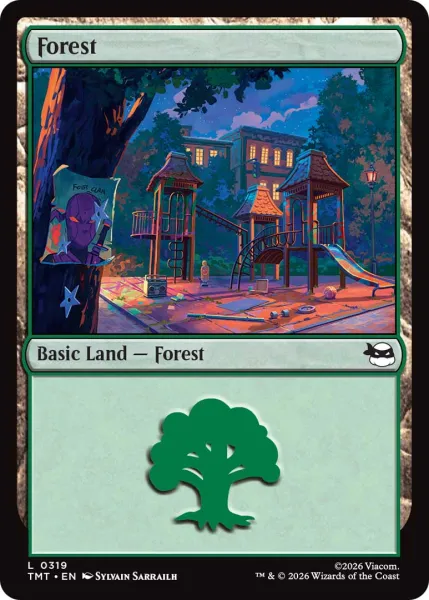
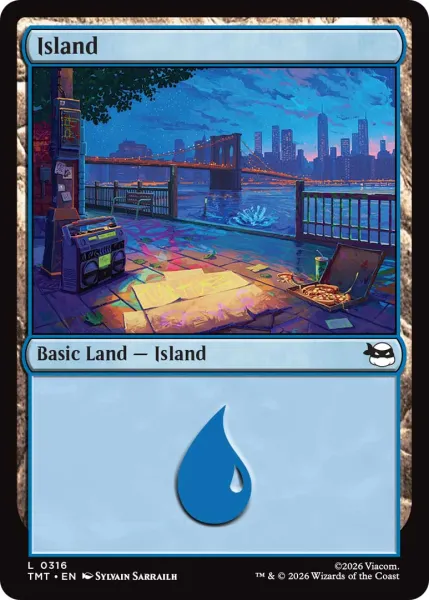
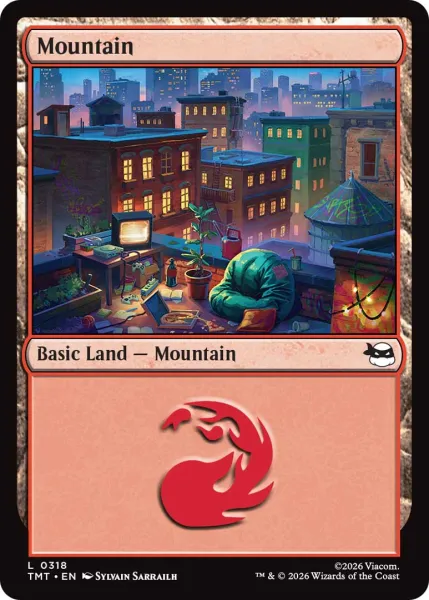
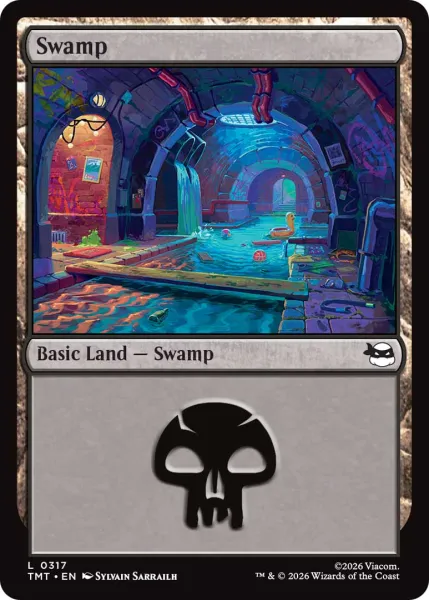
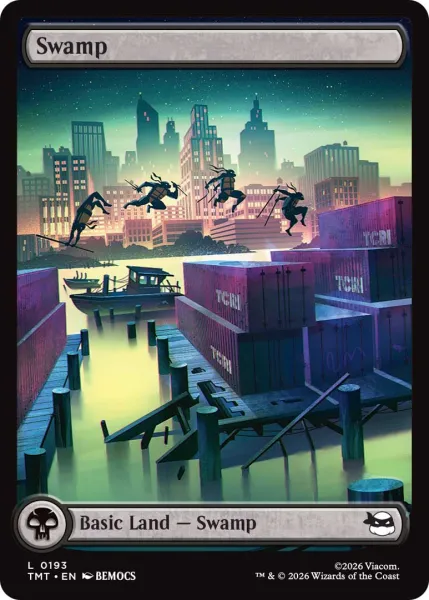
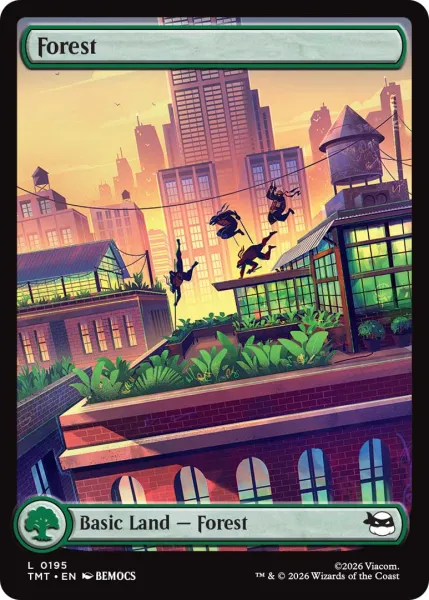
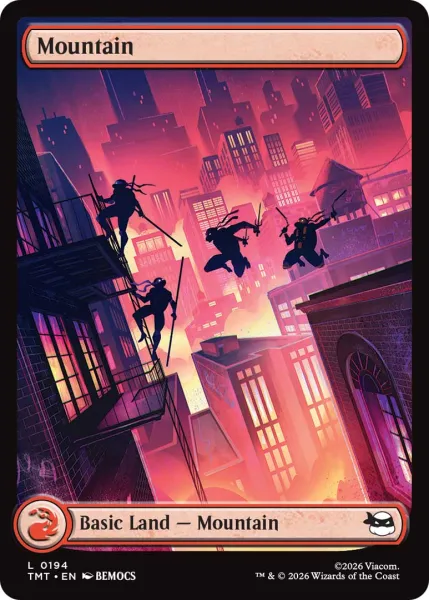
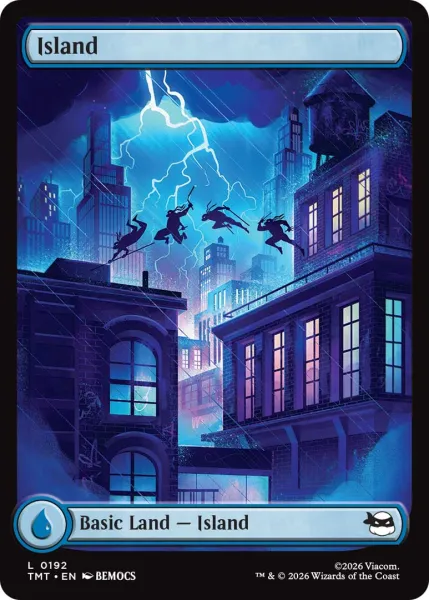
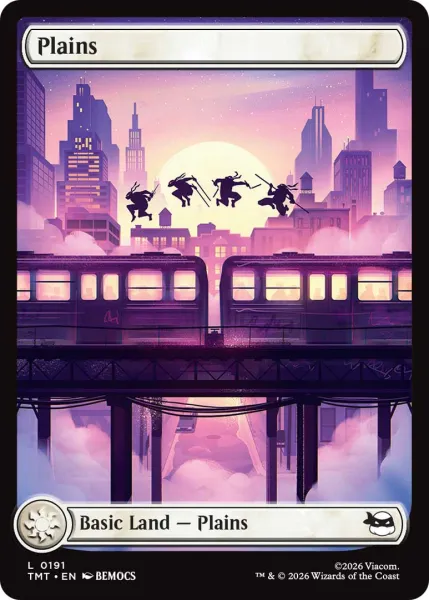
In the Vanish Lands pictured below, you can see that these basic land cards showcase various places around New York City, the metropolis the Turtles have always called home. However, if you look closer at the scenes, you'll see remnants of the Turtles – that's because these scenes showcase parts of NYC where the Turtles were just at, disappearing into the night to be heroes, according to Frasier. In the full-art Rooftop Lands, pictured in the gallery below, you'll see the Turtles' silhouettes as they leap from rooftop to rooftop, inspired by various TMNT media.
Vanish Lands and Rooftop Lands
Frasier says one of the best parts about designing this set was the breadth of TMNT iterations to draw upon for card art, and in the card below – Turtles Forever – you can see that on display as it features a different iteration of each turtle:
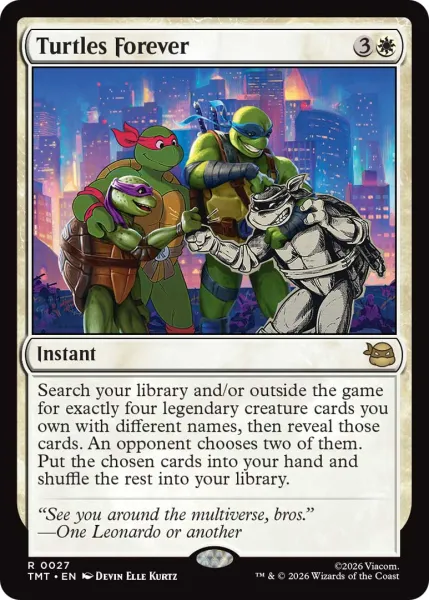
She adds that Nickelodeon, which owns the Turtles IP, was "incredibly supportive" of Wizards of the Coast creating its own iteration of the Turtles, and if you see art that isn't from a previous iteration, it's Magic's own take on the mutants. Wanting to ensure every pack comes with a Turtle, Frasier says, "We gave a Common, Uncommon, Rare, and Mythic that charts the Turtle's alignment," which is why you have Raphael, Tough Turtle; Raphael, Most Attitude; Raphael, the Nightwatcher; and Raphael, Ninja Destroyer, for example, with flavor text of quotes from Master Splinter that speak to the Turtles' training. Some of them, as you'll see, are special silhouetted versions of the Turtles, too. Check them out below:
Common, Uncommon, Rare, And Mythic Turtle Iterations
Every Turtle gets a Team-Up card, too, with each of their brothers. Frasier says, "The vibe is to understand them as brothers and see how important that is to their family." Donatello and Leonardo are the more serious and studious brothers, so you'll see them on a team-up card, while Raphael and Michelangelo are the troublemakers, and that's reflected in their team-up card, too. Here, Frasier shared the Turtle Van (an Artifact – Vehicle card) as well:
Turtle Team-Ups
There are various villains featured in this TMNT set, but the designers wanted to highlight Krang, "an eccentric little weirdo who has all the resources to make his mad schemes everyone else's problem," according to Frasier. Senior game designer and TMNT set design lead Eric Englehard says the blue Rare Krang is meant to capture his mad scientist vibes (and in the background, you'll see various artistic iterations of his mecha-suits from the design team), while his Utrom Warlord Mythic card highlights how much of a threat Krang can be to the Turtles.
On the vigilante side, Englehard highlighted Casey Jones, Vigilante, describing him as Raphael's BFF. Frasier adds that they have a lovely bromance occurring throughout the set, and Casey is the only person/card to make Raphael seem reasonable by comparison. On that front, the team took an effect that started with a blue card from Seekers of Kamigawa, a 2005 set, and turned it into a red card effect creature in Casey Jones, Vigilante. And finally, the team highlighted Cowabunga, a green sorcery card, here; Frasier says it emphasizes the idea that despite being heroes, these brothers are still teenagers. "They go on really cool adventures, fight aliens in space [...], but they also hang out with each other, pick on each other, share meals, and find things to do. They're just a couple of poor kids in New York City finding fun ways to hang out," she says.
Englehard adds that, mechanically, the design team couldn't capture the teenager vibe, so it relied on Frasier and the narrative design team to emphasize that, at the end of the day, they're still teenagers. Check out all these cards in the gallery below:
Cowabunga, Casey Jones, and Krang
Magic: The Gathering- TMNT Mechanics
At this point in the preview, the design team switched from highlighting the cards' storytelling elements to the mechanics associated with the set. There's a brand new mechanic in this TMNT set: Sneak. Englehard says it captures the Ninja aspect and can appear on instants, sorceries, and creatures, adding that anything can happen in combat because of this mechanic.
Something else new to this set is Mutagen Tokens, which read as the following: "1 (Mana), Sacrifice this token: Put a +1/+1 counter on a target creature. Activate only as a sorcery."
In terms of returning mechanics, Englehard says Alliance, which triggers when another creature enters the battlefield under your control, returns and pairs nicely with Sneak, "so you get unexpected triggers at unexpected times." Slash, Reptile Rampager, is the headliner card for Alliance. The Krang & Shredder card features the Disappear mechanic, which is an old mechanic with a new name – Revolt has become Disappear, and it triggers if something you control leaves the battlefield during your turn, which Englehard says will pair nicely with Sneak and Mutagen tokens.
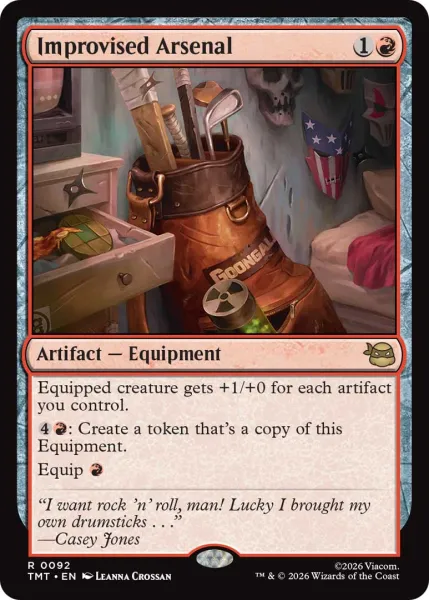
Two more things: classes return, after a successful introduction in the Bloomburrow set of 2024, and I can show you the Ninja Teen class card in the gallery below. Other creatures rely on adjectives from the classic 1987 animated series theme song, so expect class cards for "Party Dude" and more. The second thing here is Casey's hockey bag, and if you read the description, it might sound like a familiar Planal card.
Bundles
Below, I'll break down the various bundles you can purchase when this set launches next month.
Turtle Power Commander Deck
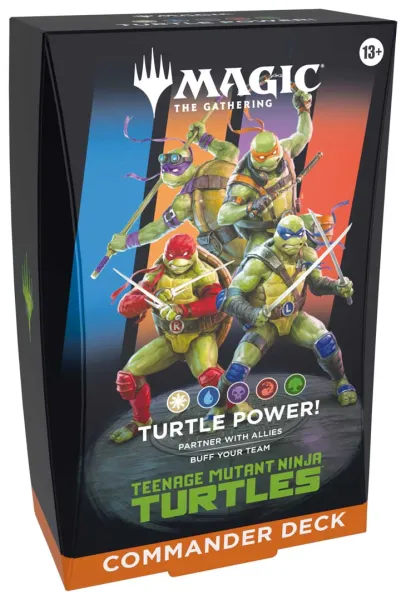
Where the main cards of the TMNT set lean into the various comic, TV, and movie iterations of the Turtles, the Turtle Power Commander Deck – Partner With Allies, Buff Your Team – is based around the mutant teenagers' video game adventures. This deck features 43 new cards separate from the main set, which is quite large for a Universes Beyond Commander deck, and you'll find all sorts of video game-inspired cards, from both old and more recent adventures. See what you recognize in the gallery below:
Turtle Team-Up: A New 2-4 Player Co-Op Game Mode
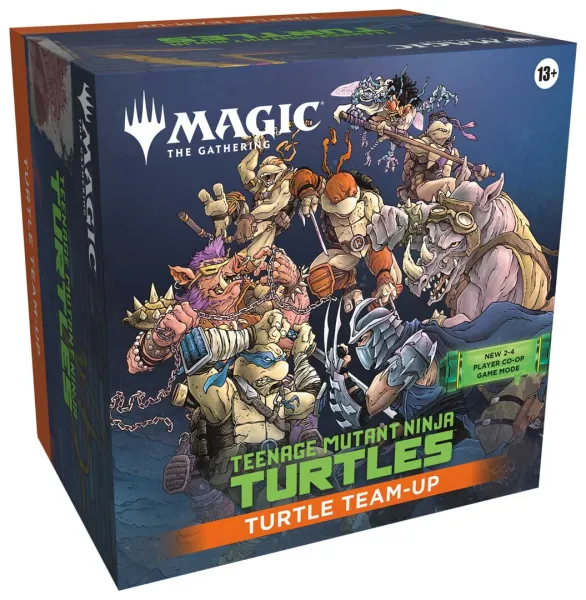
Turtle Team-Up is a brand-new multiplayer cooperative mode best played with four players, though it can be played solo (with some challenge). Englehard says Turtle Team-Up was "designed from the ground up as an approachable and exciting way to learn Magic," adding, "You're not competing against each other as you and your friends or your kids play together to defeat a horde of Shredder's minions and 11 of the Turtles' worst foes that live inside a boss deck." You can use the included decks to fight each other; however, after you've grasped how they work, the primary mode is the co-op adventure.
It can be tuned to raise or lower the difficulty, and the bundle includes four player boosters in addition to four 60-card decks and a boss deck; there are 29 new-to-Magic legacy legal cards among the decks, with roughly eight new ones in each box.
Draft Night
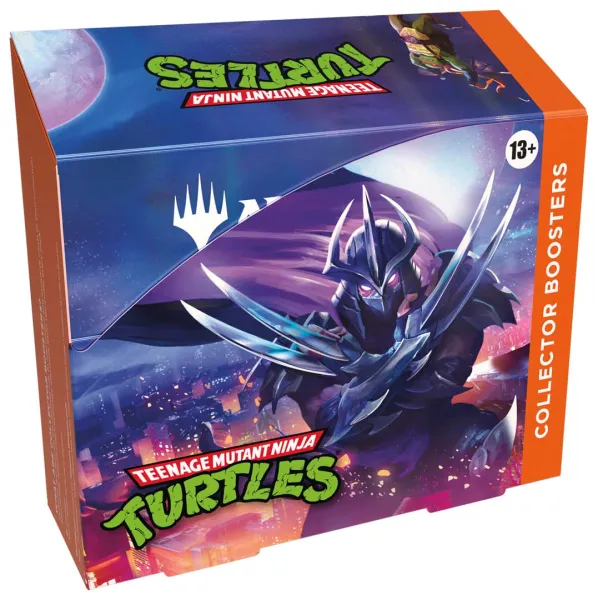
You know the deal here: this bundle includes everything you need for a pick-two draft night with you and up to three friends. It comes with 12 play boosters and one collector booster, 90 basic land cards, and a bunch of tokens.
Pizza Bundle
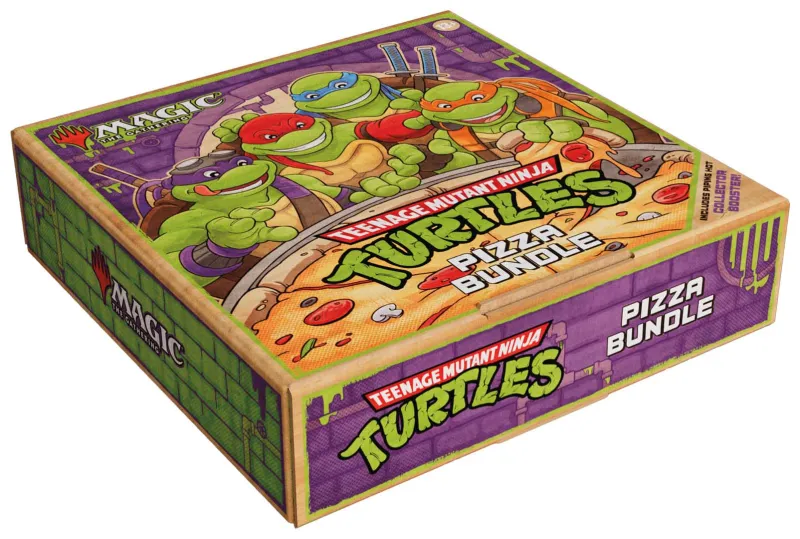
This special edition bundle is the only part of the Magic: The Gathering – TMNT set that is not launching on March 6; it hits stores on March 27. It is a set of thematic pizza cards described by the team as a traditional bundle that comes in a themed pizza box with nine play boosters, a collector booster, and a TMNT spin-down die, alongside an entire set of Pizza Lands. You'll even find Food Chain in this bundle, a classic Magic: The Gathering card tweaked to fit the theme of this Pizza Bundle.
Chase Cards, Special Editions, and More
Like every other Magic: The Gathering set, there are chase cards fans of TMNT will be hoping to find, and this time around, keep an eye out for Borderless Signature Kevin Eastman cards, Borderless Pixel Cards, Borderless Silhouette Cards, Source Material art cards, and Japanese Showcase cards. Check them out below:
Magic: The Gathering- Arena
Let's wrap things up with a quick little Arena recap: there will be a new TMNT battlefield in Arena; not every card from the Commander Deck will make it to Arena, but every legendary creature of the Commander Deck will head there, and various bundles come with Mythic Turtles, special sleeves, and more.
Alrighty, if you made it this far, thank you for reading! This is a new type of feature for us here at Game Informer – while many of us here on staff love and play Magic: The Gathering, we haven't really covered it much on the website (though we do post videos about Magic: The Gathering sets from time to time). We're looking to cover this card game more here, and today's preview is an example of how we might go about doing that.
With that said, please drop a comment below and let me know what you think of this preview style – Do you like it? Do you hate it? Do you like the galleries? Do you like the explanations and behind-the-scenes details?
Hands-On With Screamer, An Anime-Inspired Narrative Racer

Platform:
PlayStation 5, Xbox Series X/S, PC
Publisher:
Milestone S.r.l.
Developer:
Milestone S.r.l.
Release:
Rating:
Mature
A lot of times, in the racing genre, you have a pretty good idea of what to expect after just a few laps around the track. The games that buck that trend – the Forza Horizons, Mario Karts, and Burnouts of the world – often elevate themselves above the more niche racing game audience. As the studio behind the MotoGP, Ride, and Supercross series, as well as Monster Jam and Hot Wheels Unleashed, Milestone is a studio that is no stranger to the racing scene, both its conventional and nonconventional sides. The studio's latest, Screamer, might be its least conventional yet, and I went hands-on with the anime-inspired narrative racing game to learn more.
In Screamer's story mode, you control a team of three racers seemingly bent on vengeance against a fellow racer. The main character seems to be Hiroshi, while he is joined by Róisín and Frederic. Frederic, a Frenchman, speaks only in French, but his teammates respond to him in English without missing a beat. In a later cutscene, I learn that's because, in this futuristic setting, all humans have an auto-translator implanted in their heads; one character even has one that translates what his dog says. Though the circumstances surrounding the death of Quinn, seemingly the fourth member of your crew, are murky, the perpetrator is clear: Gabriel. Your team, known as The Banshees, enters the tournament for revenge.

The Banshees (or Green Reapers, as they come to be known to conceal their identities from Gabriel) aren't the only characters you play as. The story hops around a good bit, putting you behind the wheel as multiple different characters. Milestone promises you'll uncover the dark secrets of the tournament as you progress through the narrative. The dialogue between the characters is witty and often entertaining, but I didn't get a great sense of how it will progress in a satisfying way. However, for the purposes of this demo, I was more interested in how the racing felt.
Thankfully, speeding (or screaming) around the tracks feels good. Milestone wanted to capture the vibes and feel of old-school arcade racers, and from my time with the game, they've mostly succeeded. Cars don't handle too strictly when you're going around a corner, and I absolutely love how Screamer handles drifting by mapping it to the right stick. Steering still happens with the left stick, but rather than having to activate the E-brake in conjunction with steering, you intuitively use the right stick to drift around corners. It takes a bit to get used to, but after a few races, I was cornering like a pro, and when you hit a perfect drift around an elongated corner, it's a blissful feeling.
Outside of the core driving mechanics, Milestone has installed various arcade-focused mechanics, like a quick-time-event style boost mechanic, and an offensive/defensive system that uses the same energy for a unique risk/reward mechanic. To attack your enemies, you must consume Entropy, the in-game energy, which will temporarily increase your speed, causing any opponent you collide with to explode. This is an extremely fleeting speed boost, so you must be skillful to successfully take down an opponent. On the other side, you can use your energy to activate your Shield, which counters incoming Strikes. This was pretty difficult to pull off, but if you do it successfully, you get your energy refunded. There's also an Overdrive Ultimate, which you can activate when all your tanks are full. In Overdrive, every vehicle you collide with explodes, but if you touch any track barrier, so will your car. I love that every attack has a counter or risk associated with it, creating what I hope will be a balanced experience.

While the full picture is still coming into focus, what I've played of Screamer delivers on the enticing premise. The arcade sensibilities and anime-style storytelling appeal to a wider audience, while the rock-solid gameplay and longstanding pedigree of Milestone will appeal to those in the know about the racing genre. We'll have to wait and see how this all coalesces into a finished product and its subsequent reception, but for now, Screamer is a game I'll be keeping my eye on.
Screamer arrives on PS5, Xbox Series X/S, and PC on March 26.
Paranormasight: The Mermaid's Curse Review – A Spine-Tingling Dive

Reviewed on:
PC
Platform:
Switch, PC, iOS, Android
Publisher:
Square Enix
Developer:
Square Enix
Release:
Rating:
Mature
Humanity has always been fascinated by the supernatural. Tall tales and legends persist through the ages, passed down through tradition and storytelling, for many reasons, whether parables, entertainment, or sometimes, bearing shreds of a greater truth. Paranormasight: The Mermaid's Curse is steeped in these concepts, throwing the player into an enthralling rural mystery filled with murder, betrayal, love, and curses.
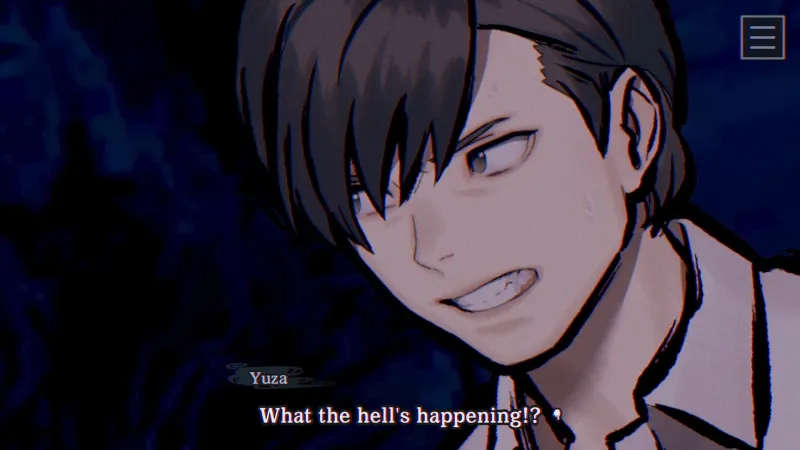
The first game, 2023's Paranormasight: The Seven Mysteries of Honjo, quickly became a cult classic: a horror-thriller with dark themes, lots of dialogue, and strange puzzles that required creative solutions. Paranormasight: The Mermaid's Curse follows in those same footsteps. It's an adventure game where you can hop between events and viewpoints in a timeline, tracking the events surrounding the small island town of Kameshima. Yuza, whose parents died in a disaster at sea years prior, has returned to the town to become a shellfish-gathering ama diver with the help of his friend Azami. A chance encounter with an apparition bearing his face, however, changes everything.
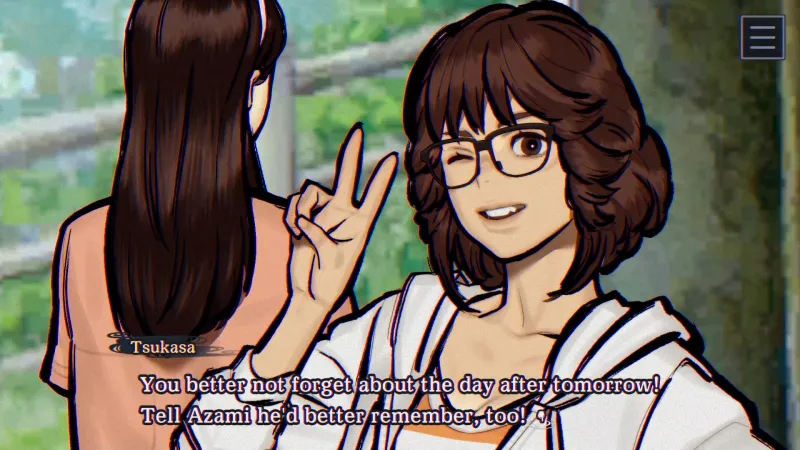
Alongside Yuza, there's a memorable cast of characters who get wrapped up in the events on Kameshima and the nearby mainland. Tsukasa and Sato round out Yuza's hometown friends, alongside several other free divers like Chie, Kikuko, and Yuza's grandmother, Tsuyu.
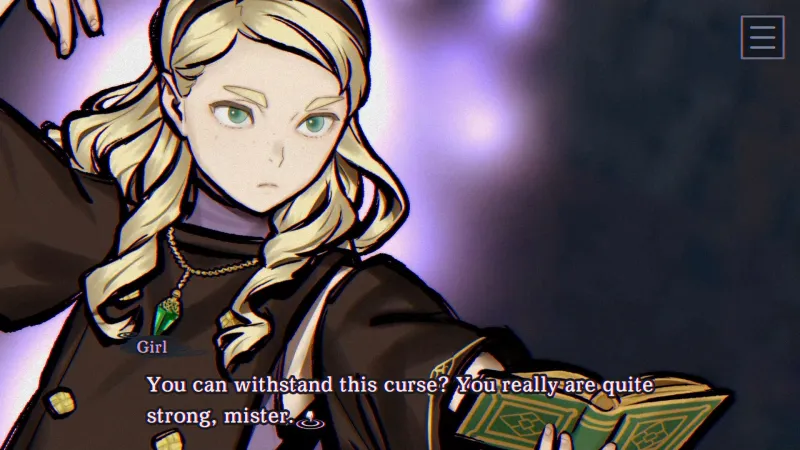
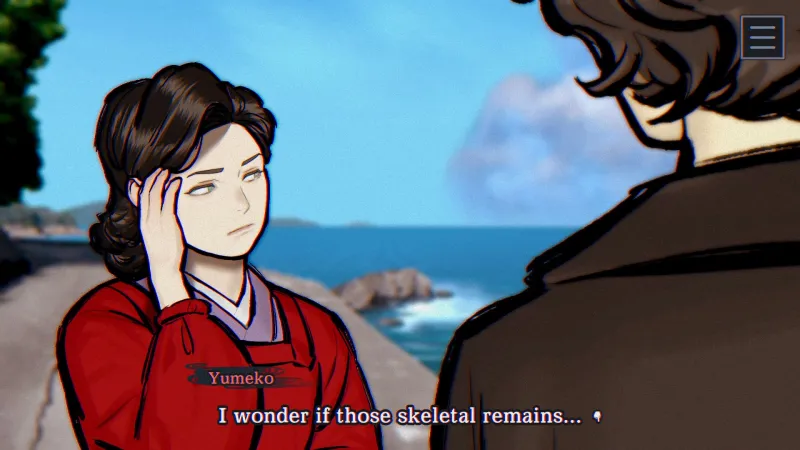
Housewife-investigator Nameko and her psychic assistant Sado form a terrific detective duo, a dynamic that answers the question, what if an unassuming Columbo-esque detective partnered with a jujutsu sorcerer apprentice? Fantasy author Avi and the inquisitive Circe, meanwhile, act as a bit of comedic relief, even when their stories get incredibly heavy. All of them are beautifully illustrated in expressive 2D portraits set against the vibrant panoramas of each area. Paranormasight's brush-stroke aesthetic feels timeless in the best ways.
The Mermaid's Curse is built on slowly unspooling and unraveling its threads to uncover the mysteries beneath. It's a slow start compared to most, even its predecessor; the story took a little while to get its hooks in me, but after several shocking revelations in a row, I was feverishly scribbling notes, jaw agape at what was unfolding. Director Takanari Ishiyama should become a household name for adventure fans.
Several tragedies are set to befall Kameshima, and by hopping around the events, progressing forward, and then leaping back through Recollections – a specific mechanic that opens up past memories to explore – you'll need to figure out how to resolve all of them. The early parts of the story are a little heavy on Recollections, which can make it tough to keep track of characters and their individual drives.
It doesn't take long for Paranormasight: The Mermaid's Curse to shift into higher gears, though. Quiet, peaceful, even mundane island life gives way to supernatural curses and mysterious deaths, and each focal-point character gets wrapped up in their own pursuits.
The mysteries are still as wonderfully head-scratching as the first game. Many of them pull off my favorite trick: asking you to name something – a character, place, or subject – without any multiple-choice answers or chance for coin-flipping guesswork. These solutions require scouring the menu's Files and Profiles section, where deeper information about history, cultures, traditions, and more gets filed away for you to peruse like an in-game encyclopedia. The Mermaid's Curse does a better job of directing you towards those answers than its predecessor, but it does typically ask you to deduce an answer. Its solutions are often obfuscated just enough to feel rewarding to uncover, without feeling like you're hitting cognitive brick walls over and over.
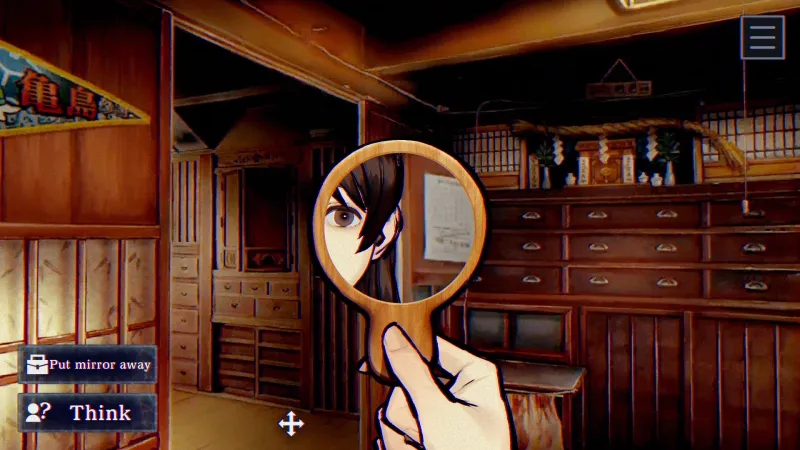
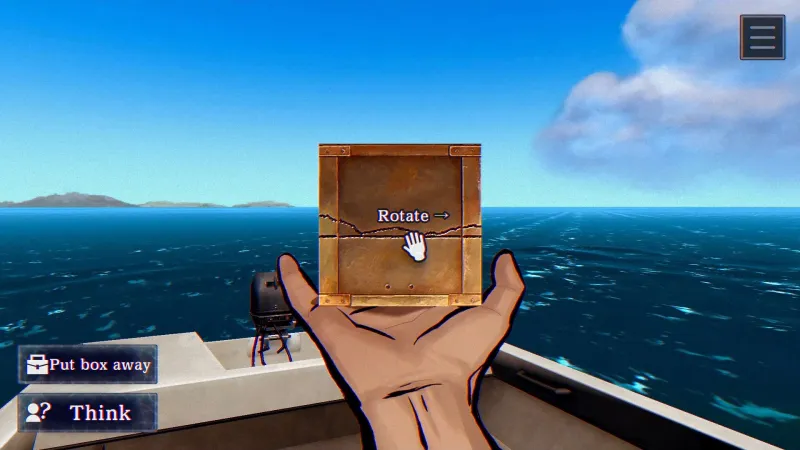
There are also a few more tactile puzzles and interactive moments than before, too. The Paranormasight team doubles down on the effects of both its 360-degree panoramas and its adventure game format, adding more tangible objects and little UI bits that end up becoming revelatory tools in the right moment. My favorite is a hand mirror, used to great effect during a section where your character is trying to see if something is behind them.
It's absolutely spine-tingling, and while The Mermaid's Curse doesn't have quite as many jump-scare moments as The Seven Mysteries of Honjo, it's still a thrill-inducing adventure. Little noises and visual cues shoot ice through your veins, and even some of the mystery solutions involve putting yourself in terrifying positions to elicit new information.
Paranormasight: The Mermaid's Curse honors the depth the adventure genre has had over the years. It's easy for some to see a game where you primarily choose dialogue prompts and talk to characters as mechanically simple. However, The Mermaid’s Curse proves the powerful malleability of the adventure format, re-enacting psychic stand-offs and terrifying encounters with the otherworldly through seemingly conventional means. There's a devilish glee in discovering a clue that's been hidden under your nose the entire time, the kind of joy only found when the mundane becomes anything but.
And that's where Paranormasight: The Mermaid's Curse hooked me, possibly more than its predecessor. Its lens narrows in to focus on a tighter, more intricately connected crew, but its supernatural tales ultimately become utterly human. What is immortality, truly? Why do we pine after myths and legends? What do the objects of our desires say about us, and what are we willing to do for them? And what do those pursuits turn us into, when the road comes to an end?
Paranormasight: The Mermaid's Curse is a brilliant modern adventure game, filled with mysteries, delightful characters, and gorgeous art. Truly, I never thought we'd see a second Paranormasight; its predecessor felt like a one-off flight-of-fancy for Square Enix, destined to be a fond oddity for genre aficionados. Now, I can only hope there's more in store.


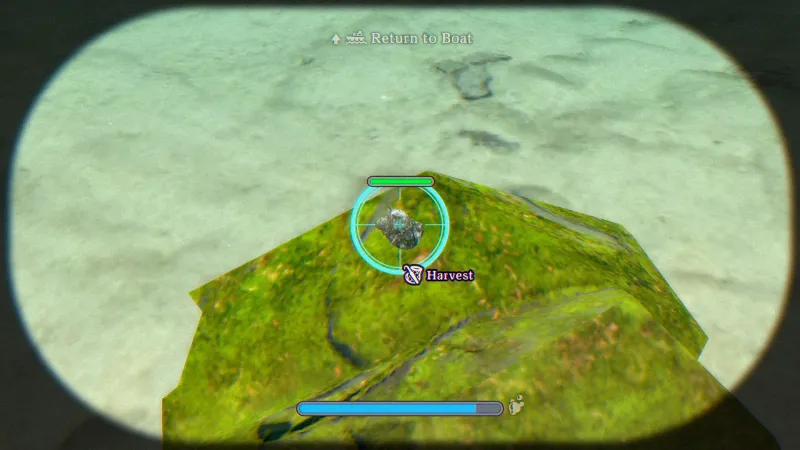

Score: 9
Nioh 3 Review – Taking The Throne
Reviewed on:
PlayStation 5
Platform:
PlayStation 5, PC
Publisher:
Koei Tecmo
Developer:
Team Ninja
Release:
Rating:
Mature
Just as the original Nioh was one of the first games to emulate Dark Souls to great success, Nioh 3 is among the first major Soulslikes to use an open-world blueprint post-Elden Ring. However, Team Ninja has always excelled at applying its own sensibilities to a now well-worn blueprint, and Nioh 3’s rewarding approach to open-world design is a shining example. Tack on a thrilling new Ninja gameplay style, and this third entry asserts itself as the pinnacle of its series.
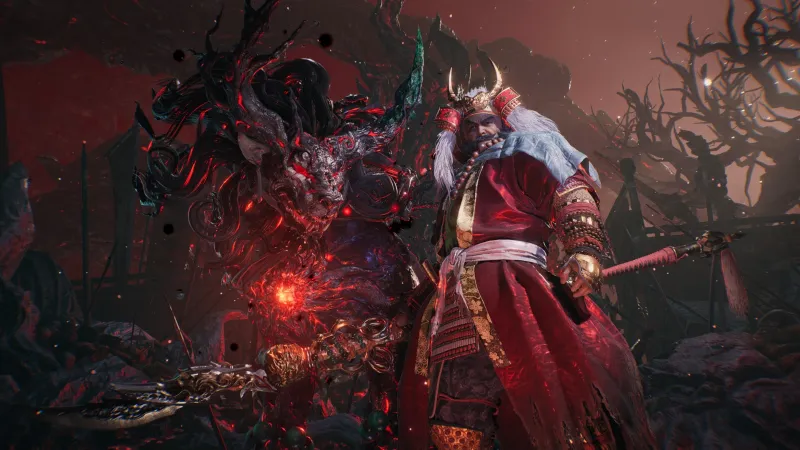
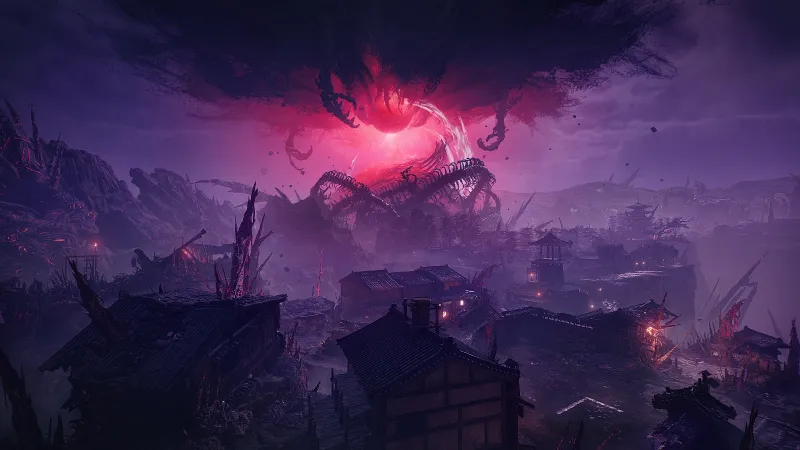
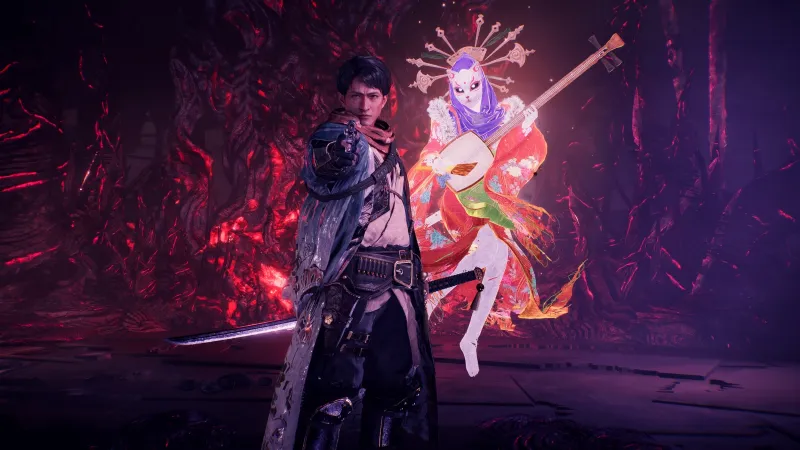
The newcomer-friendly plot sees the customizable 17th-century hero Tokugawa Takechiyo on the verge of being christened Japan’s next Shogun. Your ascension enrages your jealous older brother, who reasonably responds by surrendering his soul to evil yokai and plunging the land into demonic chaos. This darkness transcends time and space, so stopping him means time-hopping across historical eras, from early antiquity to the 19th century, to remove its influence on corrupted historical figures all vying for the same power. Though the plot becomes repetitive – visit an era, cleanse the corrupted soul of someone who really wants to be shogun, repeat – it is ridiculous fun (as all the best time-travel stories are) with a nice bit of emotional weight in the theme of discovering what it truly means to be a leader.
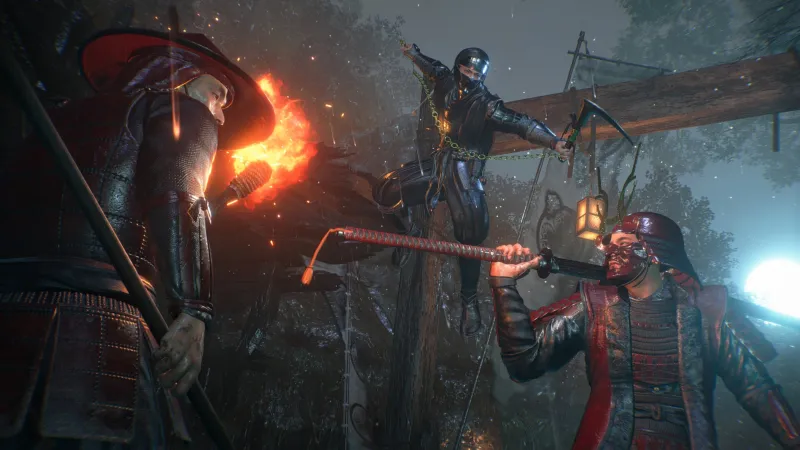
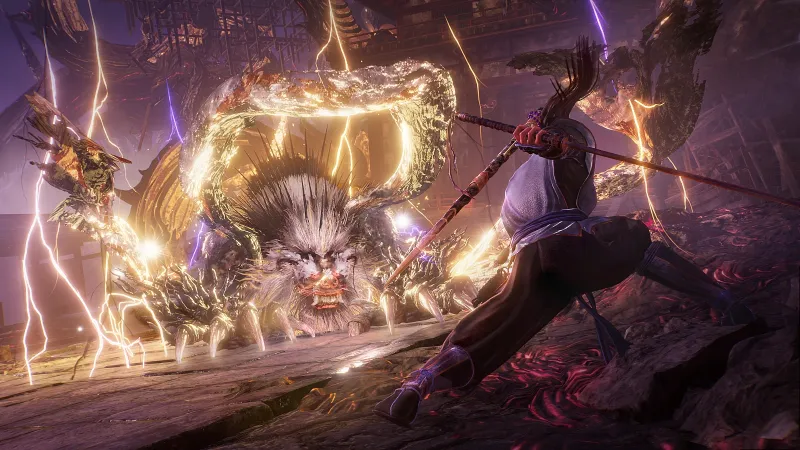
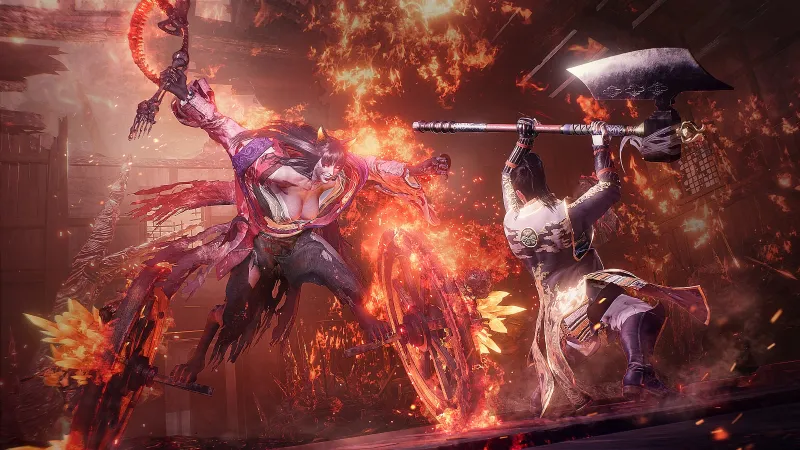
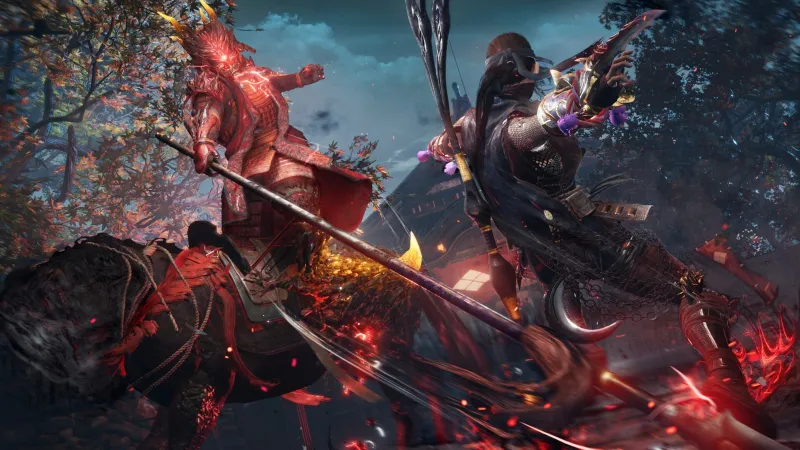
Nioh 3 doubles the series' intense and mechanically dense action with the new style shift mechanic. A button press instantly swaps between two gameplay styles: Samurai, the traditional Nioh gameplay experience of stance-switches and the Ki Pulse timing mechanic to restore stamina mid-attack, and the entertaining new Ninja. This shinobi-focused class trades defense for speedy evasion and sword stances for a plethora of cool ninja tools and magic. I love the Ninja as someone who generally favors maneuverability over power, and it became my default style. It adds a fresh Ninja Gaiden-inspired twist to Nioh’s action and is a blast to play.
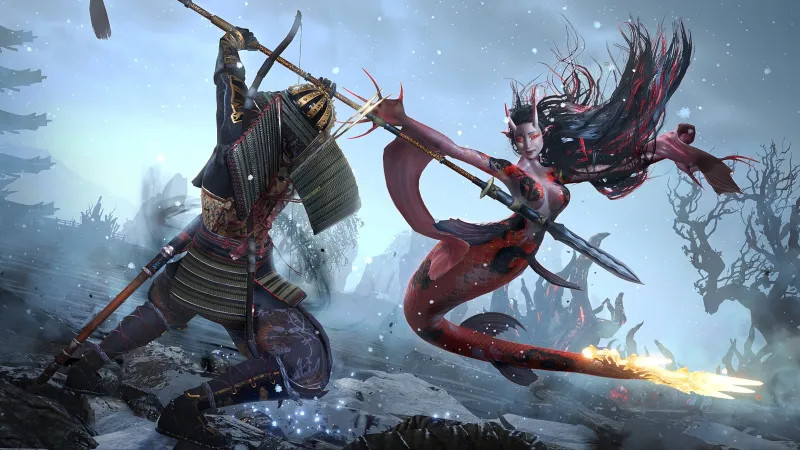
Great combat balancing means both styles are equally viable; you can theoretically beat Nioh 3 using only one of them. However, the game provides good incentives to switch things up. I loved mastering Burst Break, a powerful timed counter executed by switching styles right before certain attacks land. More broadly, regularly switching between what’s essentially two completely different characters kept the action feeling fresh throughout the 70+ hours I spent playing. Samurai duels can be combat chess matches defined by precise blocking and parrying while carefully using Ki Pulse to extend more deliberate weapon strikes. Ninja gameplay is a frenetic treat of keeping adversaries off balance with constant movement, chipping at them from afar using tools, while unleashing flurries of acrobatic, combo-heavy strikes. Boasting separate loadouts and flexible progression, including free skill point respec for the dense weapons skill trees, there’s plenty of freedom and incentive to experiment and change things up if gameplay becomes routine.
In true Nioh fashion, there’s an overabundance of options for customizing and improving your character. From summoning powerful creatures to aid in battle, like Guardian Spirits and Soul Cores, to unlocking helpful class abilities for each Style, plus multiple methods of improving/recycling the endless amount of loot, there’s a ton of useful systems to dig into. It unfortunately means a lot of time is spent poring over various menus, but the game introduces new features at a good pace. Some major tools don’t unlock until a dozen or so hours into the adventure. I appreciated having plenty of time to grow accustomed before learning yet another mechanic, while still giving me something new to sink my teeth into deep in the adventure.
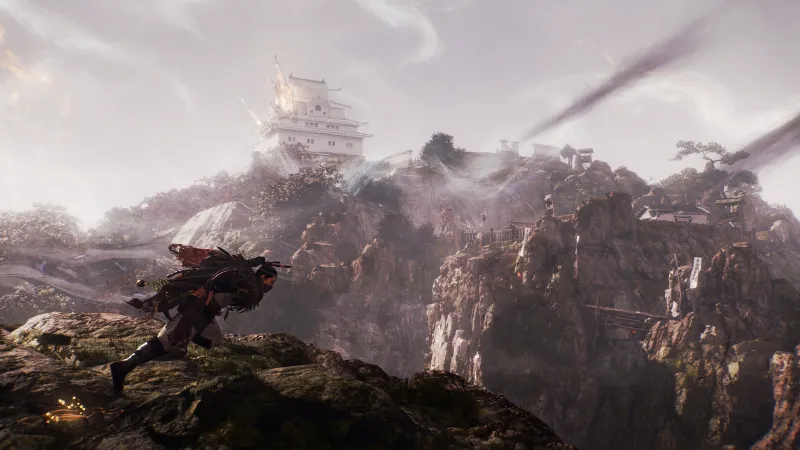
Nioh 3 wisely ditches the previous entries’ linear zones and dated mission selection for various expansive maps that players can freely explore. As proven with Elden Ring, this structure makes coping with Nioh 3’s steep difficulty much more palatable; hit a wall, and simply explore elsewhere to sharpen your skills or find better gear. I found Nioh 3 to be the most approachable entry because of this structure, especially since everything you find – along with the act of wandering itself – improves your character in some way. Killing an optional boss you confront while trekking may reward a new class ability for the Samurai or Ninja styles. Opening a random chest could unlock a new crafting recipe for a powerful weapon. Finding collectibles like hidden Kodama spirits or Jizo statues rewards skill points and permanent passive perks, such as raising the drop rate and effectiveness of healing elixirs.
Additionally, tiers of exploration rewards provide small but crucial stat bumps simply for uncovering the world, and fill the initially blank maps with icons revealing goodies you missed while in an area. Passively gaining strength while making it easier to do clean-up later compelled me to turn over every stone like few games of this ilk. This speaks to how impressively each of Nioh 3’s boatload of systems feeds into a gratifying escalation of power. The open worlds may lack mind-boggling emergent moments, but they regularly satisfy my power-hungry and completionist desires to make the numbers go up. Crucibles, challenging corrupted zones that reward powerful yet risky weapons that can hurt you almost as much as the opponent, are great destinations to gain strength. These hellish areas offer nice breaks from the overworld while often acting as a deliciously challenging final test of a region before moving on to the next one.
Nioh 3 is a fantastic leap forward for Team Ninja’s generally great but increasingly stagnant take on Soulslikes. I had to stop myself from seeking out the next awesome hidden boss or from learning a cool new weapon to see credits to write this review, and the experience largely manages to maintain its excitement throughout its lengthy runtime. Nioh 3’s hardships are many, and failure is plentiful, but its thrills are bigger and more impressive than ever before.